Theatre Aezir’s The Shark is Broken Hooks the Audience—Line and Sinker

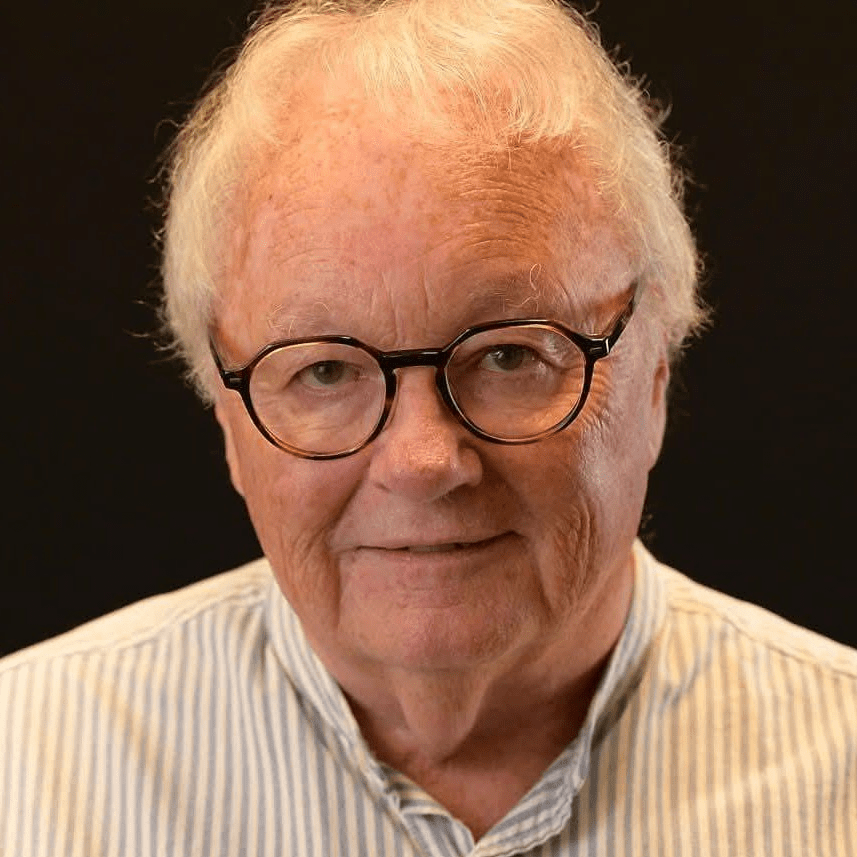
by Richard Young

Reviewed by Jo-Anne Bishop

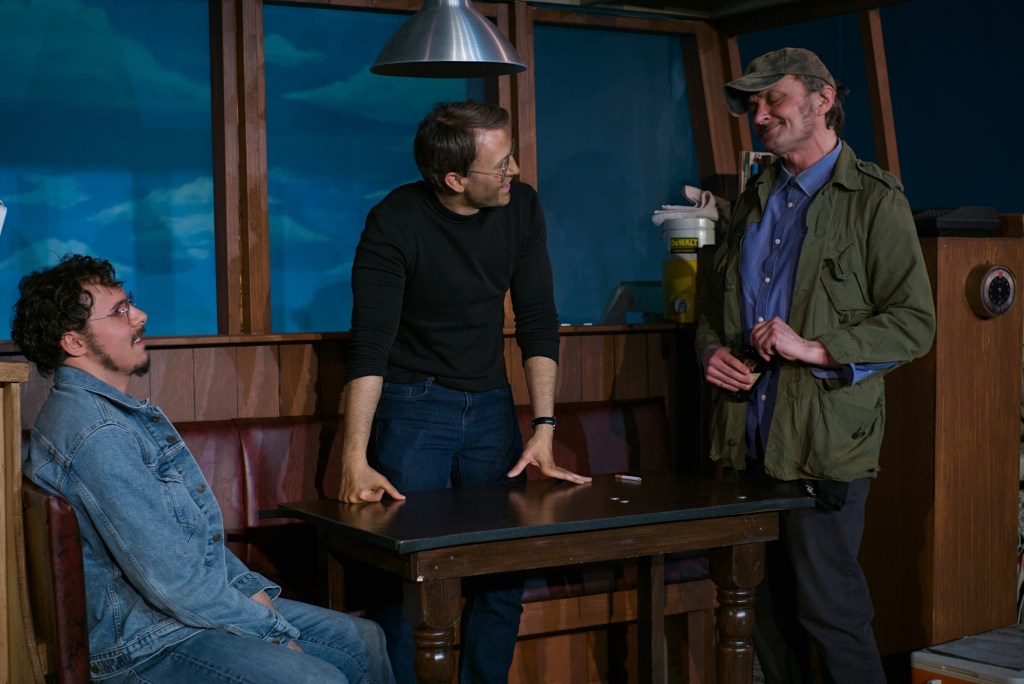
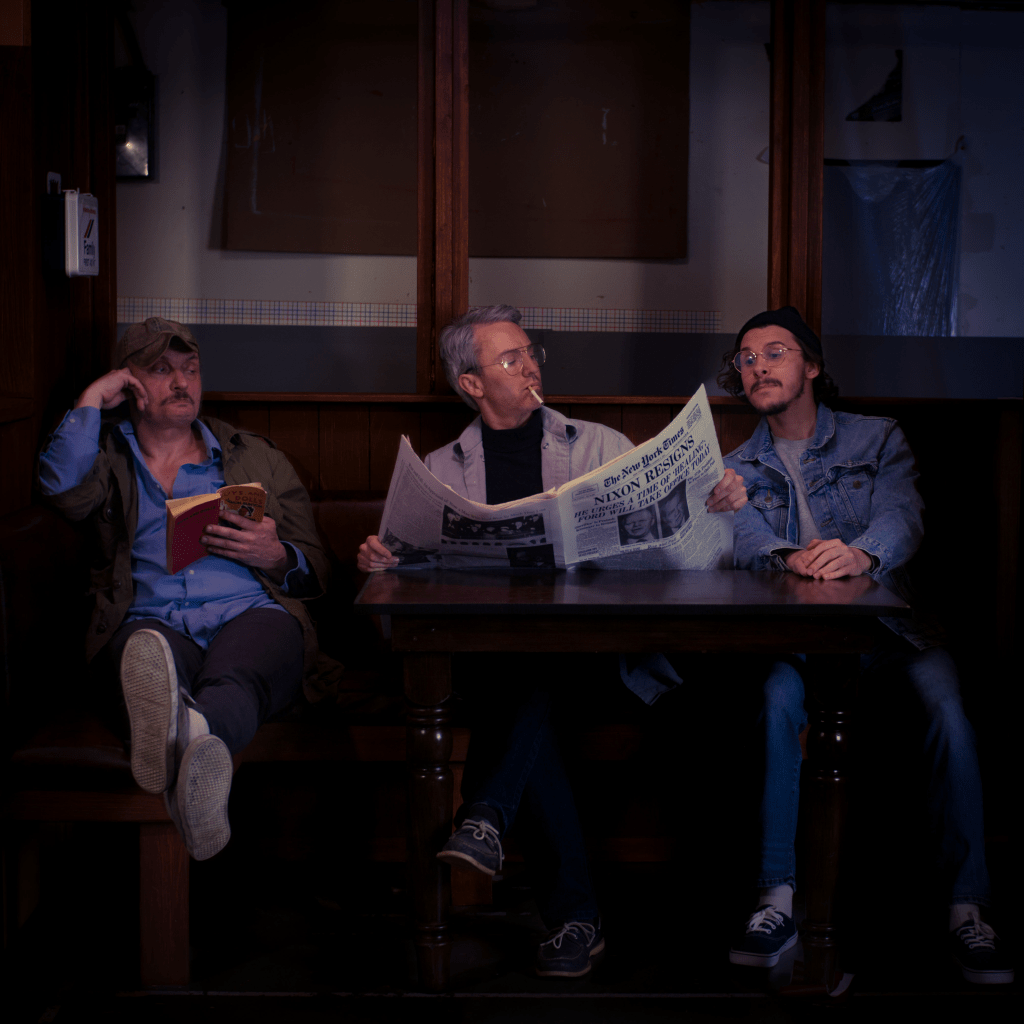
(Pictured: Jackson Balint as Richard Dreyfuss, Andrew Dodd as Roy Scheider, and Josh Cottrell as Robert Shaw. )

You don’t need a massive stage, a mechanical shark, or a Hollywood budget to make something memorable. Theatre Aezir proves that with The Shark is Broken, a smart, funny, and well-acted production now playing in the lower-level theatre at First Baptist Church in London, Ontario.

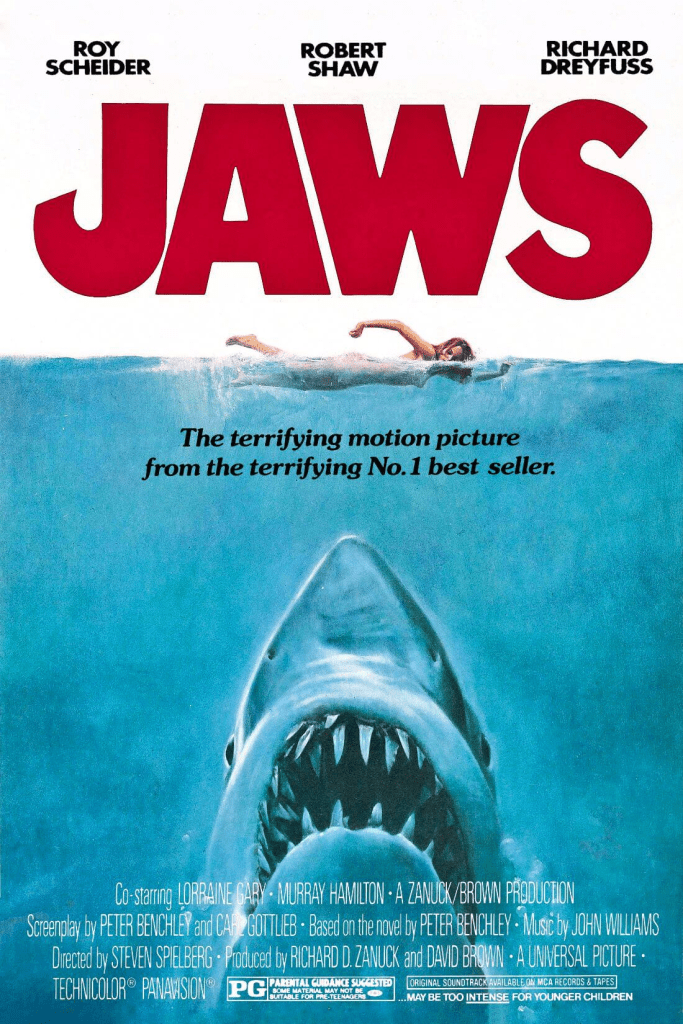
Written by Ian Shaw and Joseph Nixon, the play takes us behind the scenes of the famously troubled 1974 shoot of the Steven Spielberg film, Jaws. The setting: the Orca, floating off Martha’s Vineyard, where filming delays have left actors Robert Shaw, Richard Dreyfuss, and Roy Scheider stuck together with too much time on their hands and nowhere to go. As it turns out, that’s a perfect recipe for conflict, comedy, and the occasional moment of honesty.

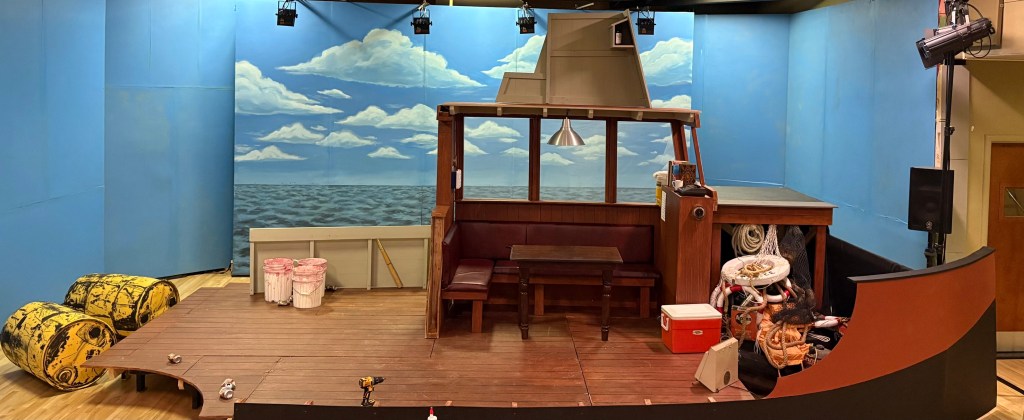
The set does exactly what it should: half a boat, fully believable. It lets the audience look directly into the action and never tries to be more complicated than necessary. The props are right; the details are right—it all works. Add in clean, effective lighting and sound to move us through time, and the technical side of the show stays solid without ever stealing focus.

(Pictured: The Orca)

Director Dylan Christopher Trahan keeps things tight and lets the script and actors do the heavy lifting. The show takes a little time to find its groove—call it getting its sea legs—but once it does, it cruises along nicely.

But make no mistake, this is an actor’s show.

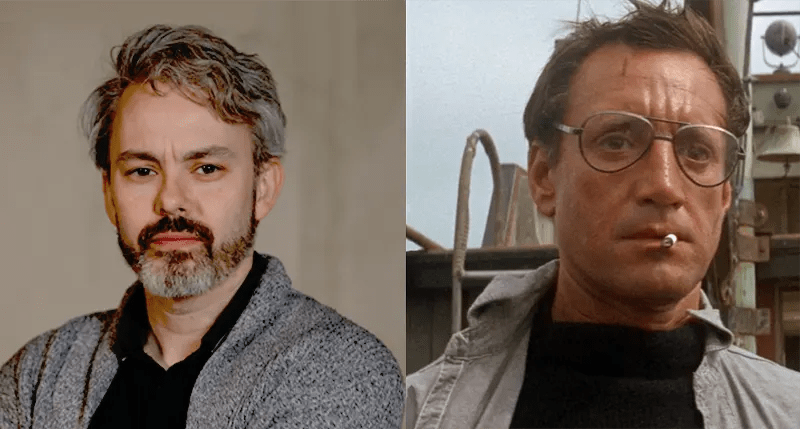
(Pictured: Jackson Balint as Richard Dreyfuss.)

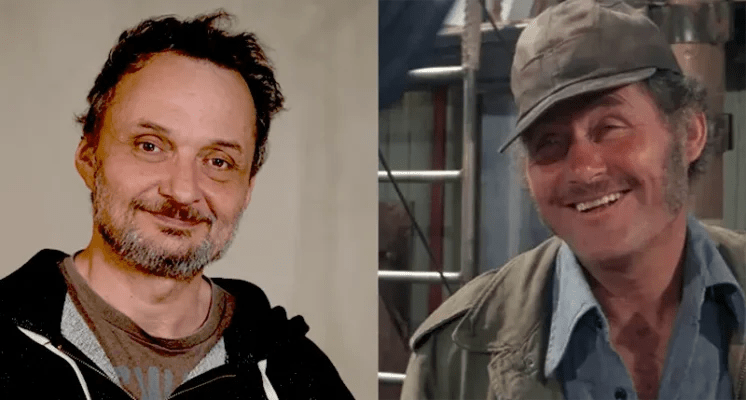
Jackson R.R. Balint leans fully into Richard Dreyfuss’ jittery, fast-talking energy, bringing just the right amount of edge without tipping into parody. Andrew Dodd’s Roy Scheider is the calm in the storm—measured, grounded, and quietly confident, with a physical resemblance that doesn’t hurt either.

(Pictured: Andrew Dodd as Roy Scheider.)

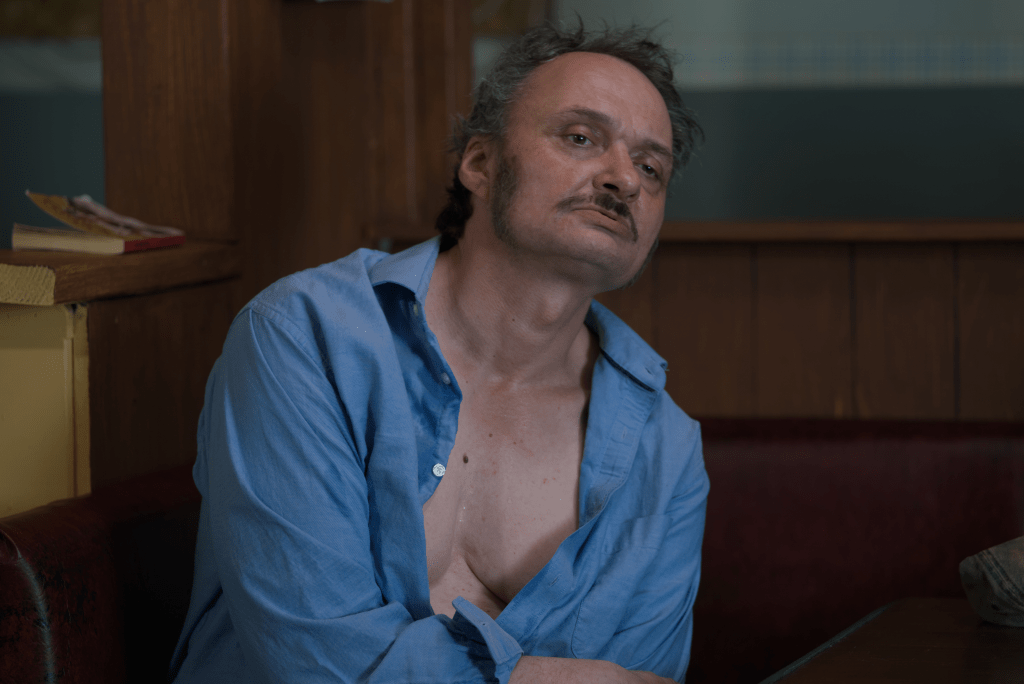
But the real catch of the day is Josh Cottrell as Robert Shaw.

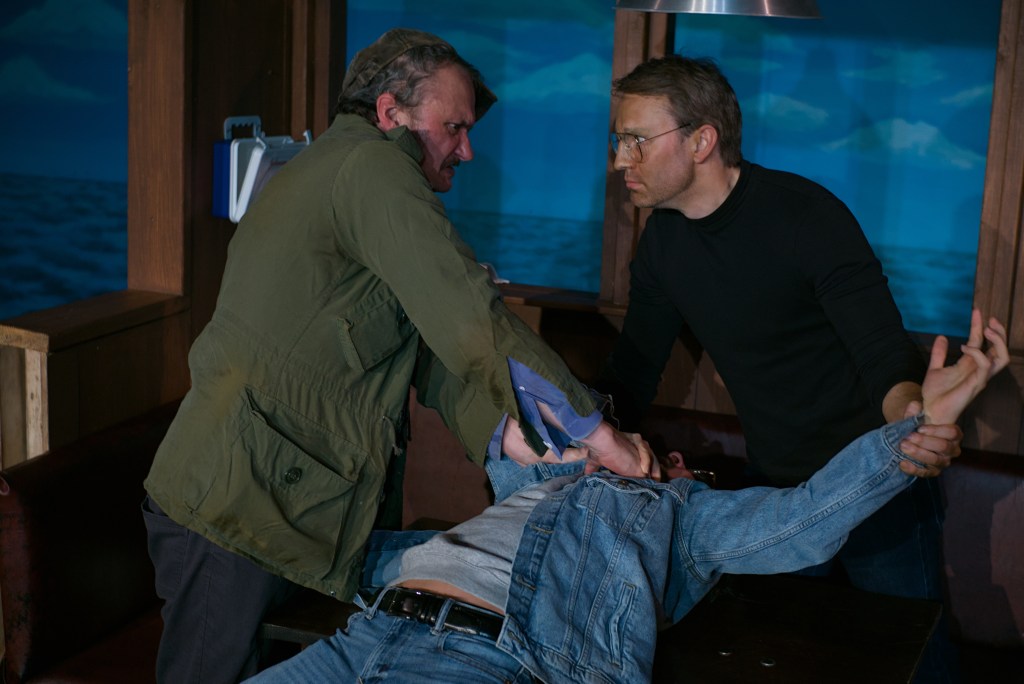
From the moment he steps on stage, you’re hooked—line, sinker, and probably the whole tackle box. This isn’t just a good performance; it’s a fully lived-in portrayal. The voice, the stance, the presence, it’s all there. At times, it genuinely feels like Robert Shaw himself wandered in, decided to do a few scenes, and left the rest of the cast to keep up. It’s a commanding performance and the anchor that holds everything together.

(Pictured: Josh Cottrell as Robert Shaw.)

What’s especially impressive is that none of the actors fall into simple impressions. These feel like real people, not SNL sketches. Their chemistry is strong, their timing is sharp, and their relationships keep the audience invested throughout.

Costumes by Elizabeth Durand are another win. Accurate to the film and era without feeling like costume for costume’s sake. It’s one more detail that helps sell the world of the play.

Full disclosure: I’m a longtime Jaws fan and a big admirer of Steven Spielberg, so this show was always going to be in my wheelhouse. But even if you’ve never seen the film (though honestly, you should fix that), there’s plenty here to enjoy. At its core, this is a story about big personalities stuck in a small space, and that’s something anyone can relate to.

It starts a bit slow, but once it hooks you, it doesn’t let go. By the end, I was all in, and possibly the first on my feet for a standing ovation.

Theatre Aezir’s The Shark is Broken is funny, engaging, and impressively well done. No frills, no fuss, just strong performances and a story that lands. And this small show proves – you don’t need a bigger theatre.

IF YOU GO:

What: Theatre Aezir’s presentation of The Shark is Broken, by Ian Shaw & Joseph Nixon

Where: First Baptist Church, 568 Richmond St, London, Ontario

When: April 9-19th, 2026

Tickets: $38 Tickets for The Shark is Broken

Reviewed by Jo-Anne Bishop.

Background and Experience in the Arts

My background in the Arts started with an early love for music and dance. I attended my first concert at 10 years old (Helix at the Sarnia Arena in 1983!) and began tap and modern jazz dance lessons around the same time. My love for live theatre was built through school trips to the Stratford Festival to see plays like Romeo and Juliet, The Merchant of Venice, and Macbeth, and a trip to Toronto for The Phantom of the Opera, which quickly became my all-time favourite.

I dreamed of performing for many years, but being too self-conscious to audition in high school, I sat on the sidelines and instead reviewed music and theatre for our school newspaper. In 2013, I finally pushed my fears aside and was cast in my first play, Laughter on the 23rd Floor, as Carol Wyman, the only female writer on the Max Prince show. I have since performed in productions of Birth (Jillian, 2016), Hamish (Annette, 2023) and The Curious Incident of the Dog in the Nighttime (Mrs. Alexander, 2024).

Previous Reviewing Activities

SCITS, Sarnia, Ontario – High school newspaper reviewer for Music and the Arts

London Fringe Festival, London, Ontario, 2012-2015

Independent Reviewer and Blogger (Theatre in London and The Pollyanna Papers), 2015-2016?

Why am I jumping back into the fray now?

After performing for a few years, I’ve decided to take a break from the grind of auditioning, rehearsing and performing. While I love it immensely, it’s a lot of work. Performing has given me a whole new perspective and appreciation of what goes into a production and the ability to look at reviewing with a fresh set of eyes.

Thoughts about the London arts and culture scene, especially local theatre

Hoo wee! London has such a wealth of talent, from youth to adults. Every time I see a play, I am amazed at how talented our actors, directors, producers, set/prop/costume/light/sound designers are. I don’t think causal observers realize just how much goes into making a production from the audition to the curtain call. It is a huge undertaking, and to think our theatres produce such world-class productions on some very tight budgets is astounding, especially at the community theatre level, where volunteers do everything.

Sadly, since COVID, I have witnessed a huge decline in attendance at performances, and it breaks my heart. I have also noticed a sad lack of reviews lately, which I find are necessary to give people an idea of what to expect and a reason to go to the theatre.

So, before I can put my feet on the stage again, I want to help put bodies in the seats. We need to reignite a love for theatre and the arts in this city.

Q&A Interview with Patrick Brennan, Author and Director of The Family Creetin.

by Richard Young

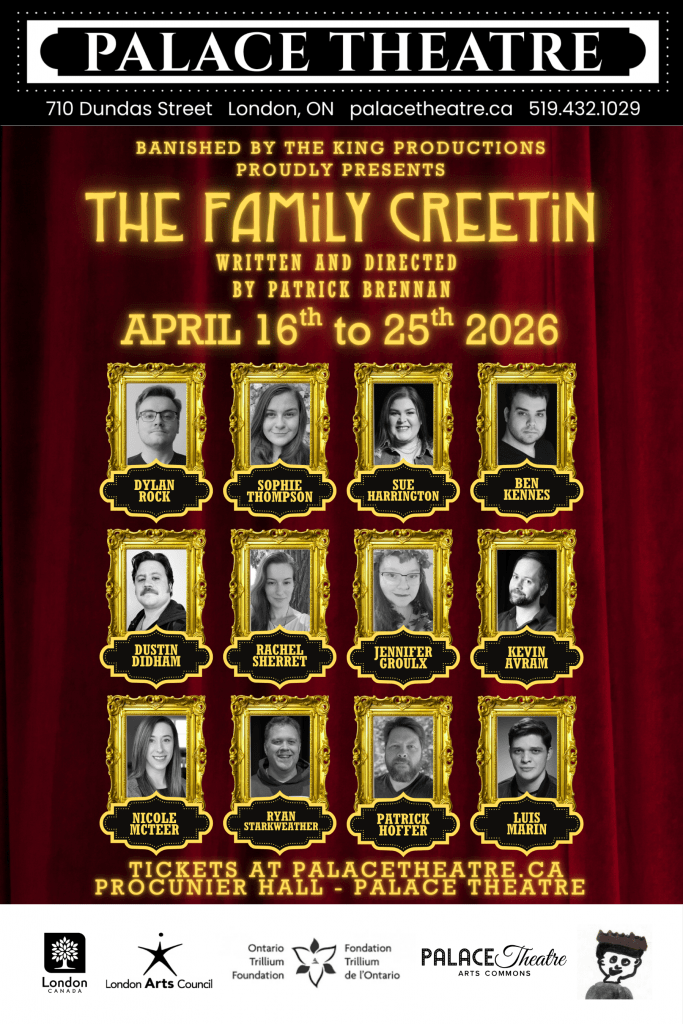
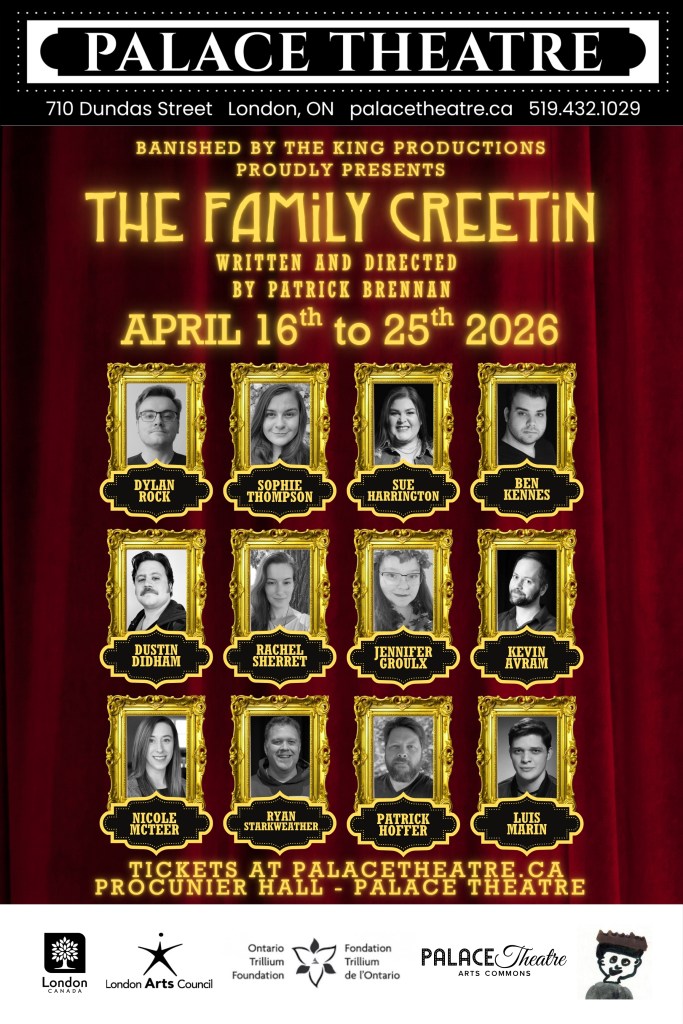
What follows is a Q&A Interview with Patrick Brennan, author and director of The Family Creetin, playing at the Procunier Hall at the Palace Theatre from April 16 to 25. The Interview was conducted by The Beat Magazine’s Publisher & Content Manager, Richard Young.

Q. Tell me about The Family Creetin – backstory, author, and performance history.

The Family Creetin was born out of a few places and ideas. I was always enamoured with the golden age of British detective fiction, particularly Lord Peter Whimsey in Dorothy Sayers string of novels and the ridiculousness of self-seriousness. I’ve been writing shows since 2012 for Banished by the King and have always skewed to the less serious, more character-driven work. I like finding the fun in how characters interact. For our theatre group, we were always looking for large, gender balanced shows and the prospect of a single set, big cast, whodunnit-type show was such a natural fit. I loved giving every character the spotlight through the show, and the range of the roles was a lot of fun to play with. Just a mass of ridiculous and self-important people that played on some tropes with some hopeful plot twists, and this show is a good, fun night out.

Q. Could you provide a brief plot synopsis?

In The Family Creetin, a group of six siblings and their significant others are called home by their father, a Duke that owns a massive food canning empire, for a mysterious reason. They fight, bicker, and snipe at each other before the Duke makes known his plans, and a frantic search for a thief begins!

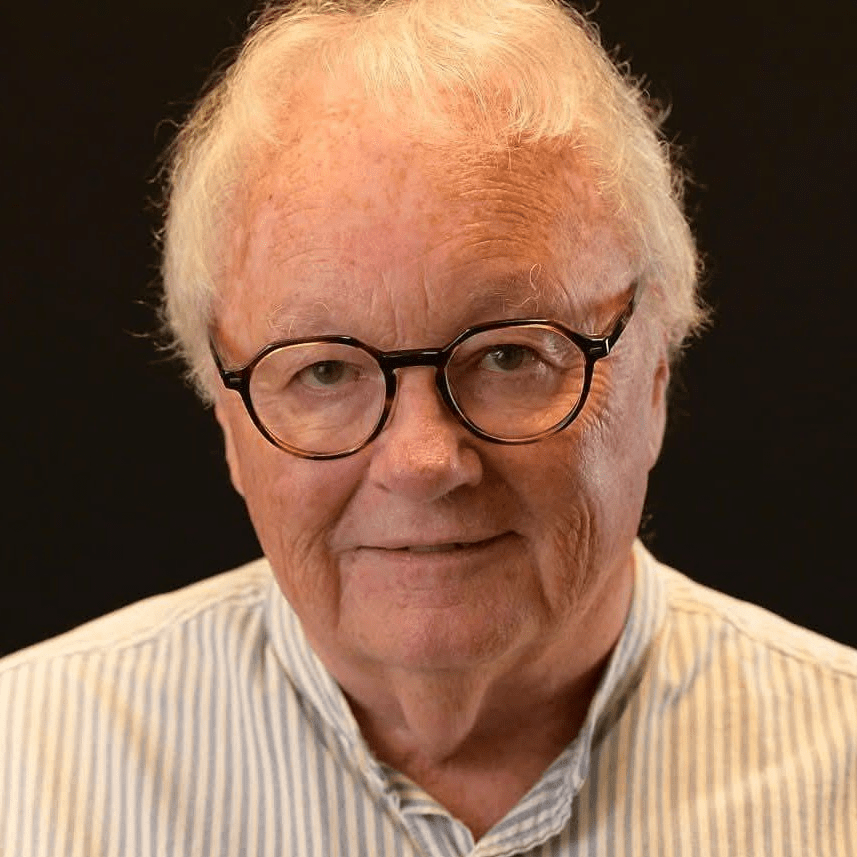
(Pictured: Patrick Brennan, author and director of The Family Creetin.)

Q. Does the Family Creetin have any real-life counterpart?

I have heard it said that it is Downton Abbey-meets-Arrested Development, and that’s high praise! I began watching Downton Abbey weeks before the show originally opened in 2015, having written it a year before and was shocked by how many character names they stole from me!

Q. How would you best describe the play?

The play is a comedy, though I’ll leave that up to the audience. If there’s a message, I hope it is that a bit more kindness and empathy are never misplaced.

Q. I see that the play was performed at TAP back in 2015. Why are you reviving it in 2026? Any major revisions to the script?

We originally ran the show back in April of 2015 and thought eleven years was the perfect amount of time for people to forget the story and pay for another ticket to come see it again! This script is more polished and, as with the first, improved with rehearsals. We have had the advantage of two exceptionally creative, funny, and inventive casts running through this script, and, with complete control over the material, we have always encouraged and applied suggestions and adlibbing – if it’s funny, it stays! I couldn’t be more grateful to all of the moments, small and large, that these actors have put into making the show better, rehearsal after rehearsal.

Q. Why have you chosen Procunier Hall for this run?

The space is ideal for the single room, tight quarters, crucible of the show! And it was available.

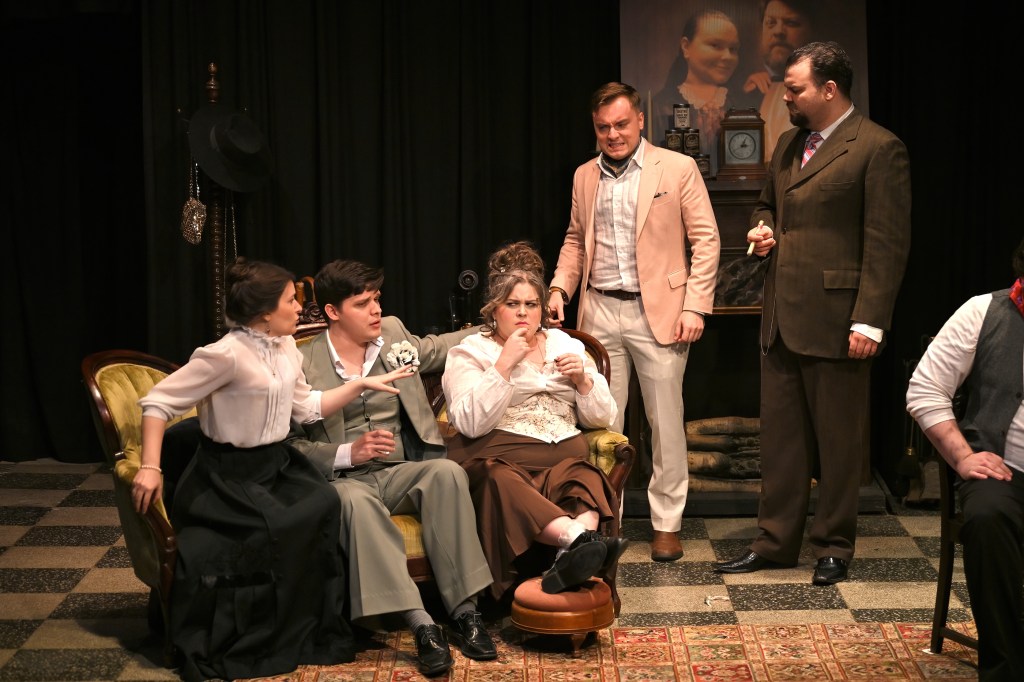
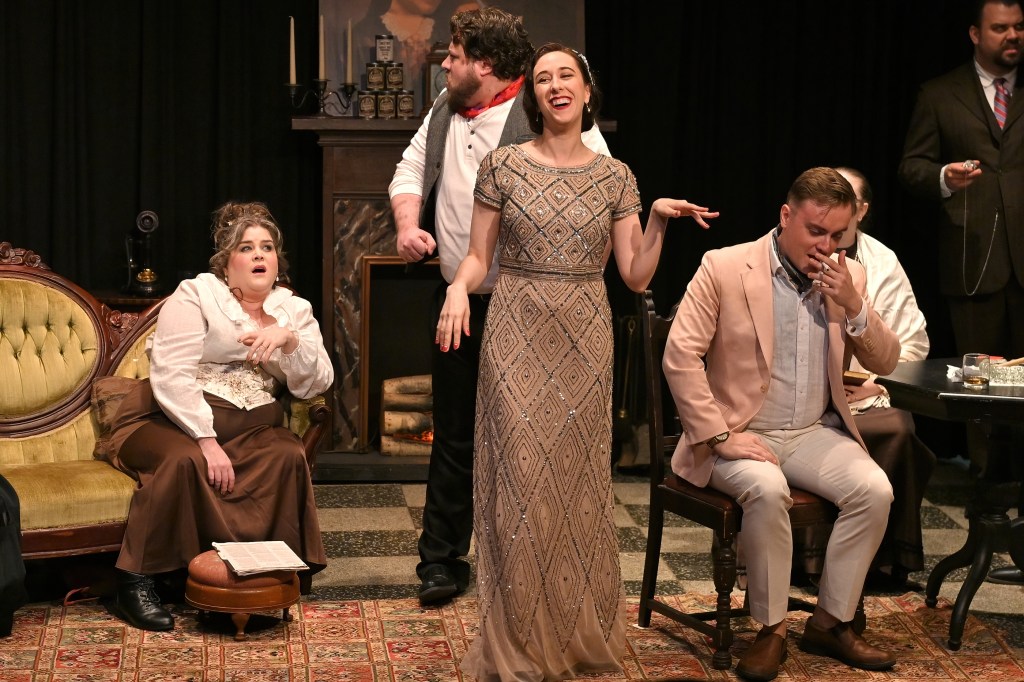
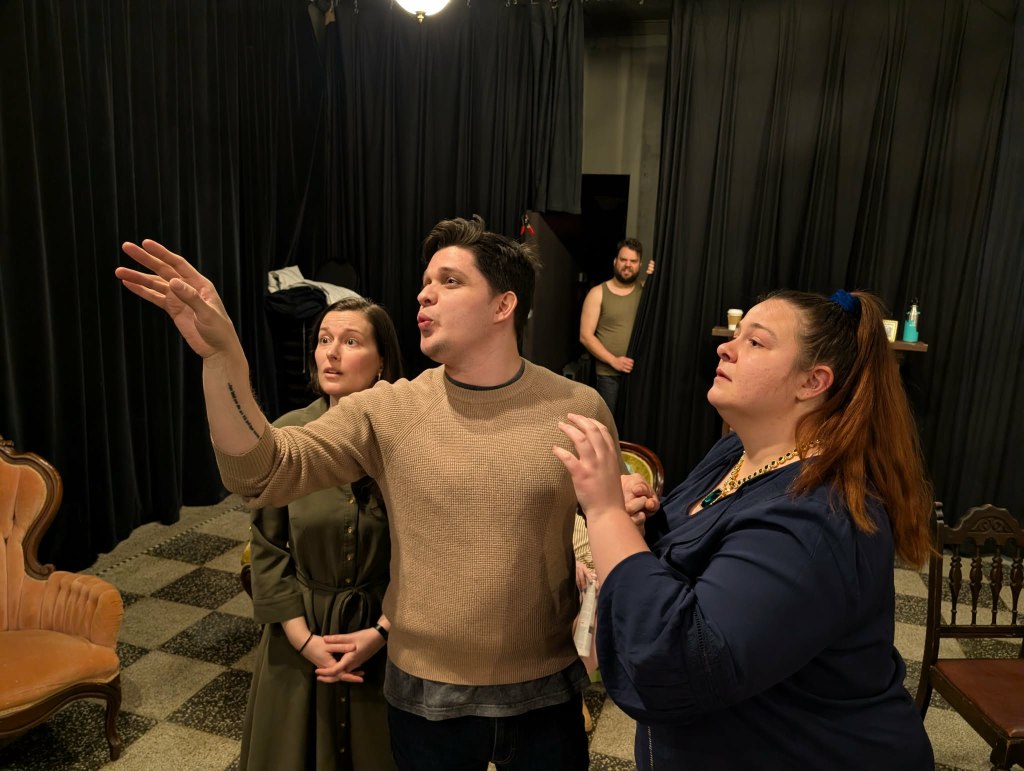
(Pictured: Rachel Sherret, Luis Marin, Sophie Thompson, and Ben Kennes.)

Q. How would you describe the sets, props and costumes of the play?

The Palace Theatre has been exceptionally generous with its set pieces, props, and costumes to make a very immersive sitting/drawing room environment for interwar England. We also have incredibly talented cast members who stitch, sew, bring props, and put a full effort into making their characters look as good as they perform them.

Q. What can audiences expect?

I would hope audiences take away some laughs, a bit of an escape, and maybe a line or two that sticks with them! Our performers, whether in the spotlight or awaiting their next line, make it a veritable Where’s Waldo of moments, faces, and bits that make multiple viewings a must.

Q. Is there anything else you think readers should know about The Family Creetin?

The Family Creetin has been so incredibly special to me personally. Not only was it my second script for Banished by the King, allowing me to work with my brother, Sean, and so many others in the group, but it was also where I met my would-be wife, Amanda. I was a self-absorbed, wannabe industrialist with an embarrassing secret, and she was a strong-willed, opinionated, in-your-face American dancer from the silent film era. A match made in heaven, and one for which I absolutely love this show. Also, there’s a sequel!

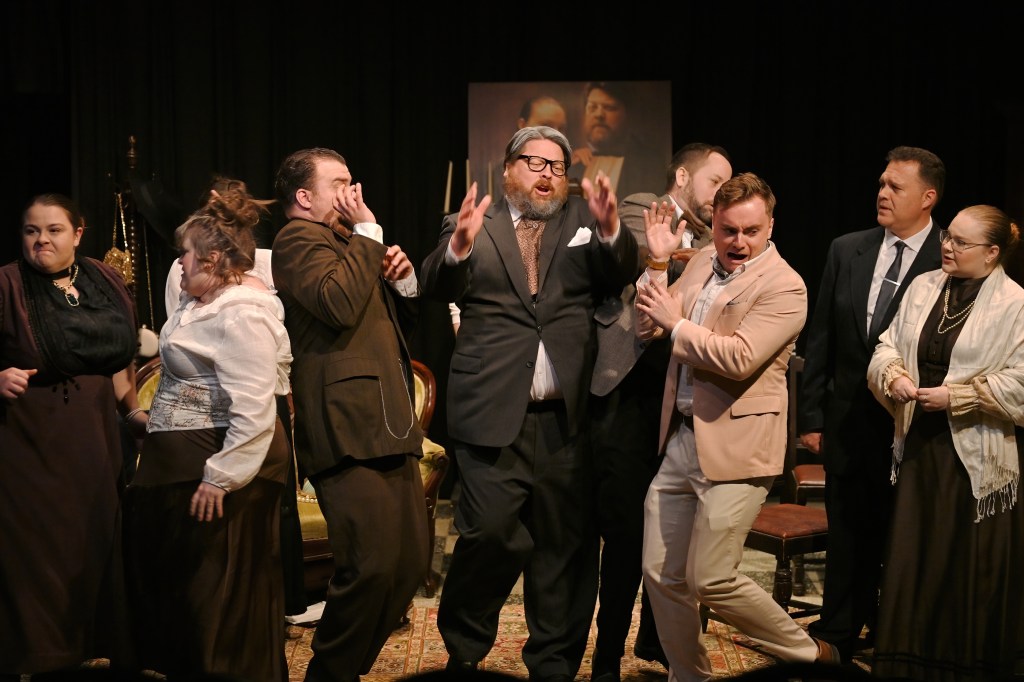
(Pictured: The Family Creetin set in Procunier Hall.)

Cast and Crew of The Family Creetin:

Cast:
Patrick Hoffer – Archibald
Sophie Thompson – Victoria
Ben Kennes – Reginald
Sue Harrington – Gloria
Dylan Rock – Frederic
Kevin Avram – Bertrand
Jennifer Groulx – Sybil
Ryan Starkweather – Roger
Luis Marin – Raul
Rachel Sherret – Mary
Nicole McTeer – Ginger
Dustin Didham – Nigel

Crew:

Directed By: Patrick Brennan
Produced By: Dan Curtis
Stage Manager: Jeremy Hewitson
Lighting Design By: Mark Mooney
Sound Design By: Doug Deschenes
Costume Design By: Tannis Daoust.

IF YOU GO:

What: Banished By The King Productions presents The Family Creetin.

When: April 16 to 25, 2026.

Where: Procunier Hall at the Palace Theatre, 710 Dundas Street, London, ON.

Tickets: https://mytickets.palacetheatre.ca/eventperformances.asp?evt=527

About Banished By The King Productions:

Banished By The King Productions has been creating original and unique theatre in London, Ontario, since 2009. Since the initial banishment, Banished has produced eighteen original works, all written by local London, Ontario, playwrights.

It all started as a dream to continue to produce, write, and act in shows after graduating from university. Many of our original and founding members attended King’s University College, and thus, once our studies were over, we became Banished By The King. Over the years, the group has morphed and grown to include the talents of many members of London’s thriving community theatre scene.

In 2024, we became the Theatre Company in Residence at the Palace Theatre Arts Commons to continue to create new theatrical productions and promote original London-based work.

Website – www.banishedproductions.ca

Q&A Interview Conducted by Richard Young, Publisher & Content Manager of The Beat Magazine 2025.
Community Art Groups: Camaraderie, Education, and Exposure

by Richard Young

By Beth Stewart

London has a richness of community art groups, including the Brush and Palette Club, the Gallery Painting Group, the Lambeth Art Association, and the London Community Artists.

While each occupies a unique niche, all provide camaraderie, education, and exposure.

The Brush and Palette Club (B & P), formed in 1972, grew out of painting sessions organized by artist and teacher Dorthy Heaven. By 1989, the small group had grown to 50; current membership is capped at 110 for practical reasons, and it has a healthy wait list.

B & P Publicity Convenor Marilyn Kidd says many artists join the club because art making can be an isolating activity. Membership allows them to be “stimulated, motivated and inspired.” She says members enjoy participating in art-related activities with the group and “growing together as they learn about new painting techniques.”

The club meets monthly, except for July and August, at Riverside United Church. Members enjoy presentations by invited speakers, trips, and seven hands-on workshops in a variety of media per year.

(Pictured: Brush and Palette artist Linda Deckert’s “High on a Windy Hill”, acrylic, 24 by 28 inches.)

The club strives to provide a supportive environment for members, to provide opportunities to broaden artistic skills, and to promote visual art in the community at large.

What differentiates the B & P Club from other art groups is the nature and quantity of its activities. Each meeting has an invited guest who speaks on a wide variety of topics relating to art. The meetings are also social occasions with time for friendly conversation and interaction during a coffee break. As well, there are two club luncheons each year.

An annual show and sale gives members a specific event to work toward. Working together at the show creates a deep bond as members all pull together to make the event a big success.

The Brush and Palette Club’s next Art Show and Sale is April 9 to 11 at Riverside United Church.

(Pictured: Brush & Palette artist Alice Price-Vermeulen’s “Palimpsest”, mixed media, 12 by 12 inches.)

Kidd joined the group in 2012. She says, “Being a member has encouraged me to persevere and to grow as an artist, and I have benefitted from the friendship and support of other members.” She is also a long-time member of the Gallery Painting Group, where she enjoys “plein air” work. She says, “Each group offers various advantages, and I would not give up either of them!”

For additional information, visit: https://brushandpaletteclub.com/

The Gallery Painting Group (GPG) was formed in 1953 at the recommendation of the president of the Western Art League, which was founded in 1876 to promote art in London, Ontario

It includes 70 local artists who enjoy the plein air painting experience, which is the act of painting outdoors. From May to October, members of the group paint on location on Tuesday and Saturday mornings at various locations in and around the London area.

(Pictured: Gallery Painting Group artist Wendy Reid’s “Off the Trail”, oil pastel on black paper, 9 by 12 inches. From a plein air day at Springbank Park.)

As members interact frequently, official meetings are limited to two per year.

Marily Kidd says, while the group has fewer meetings, members interact frequently from May to October while painting together outdoors in and around London in “fascinating and diverse locations.” Because it’s a smaller group, the sense of community is strong.

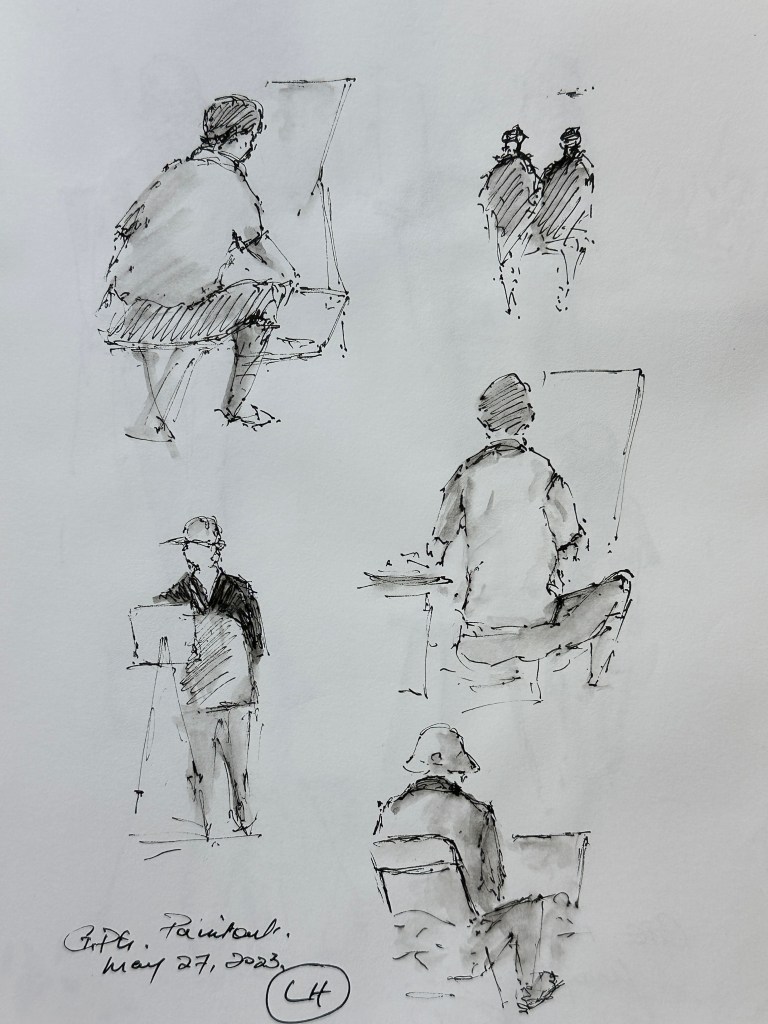
(Pictured: On location sketches by GPG artist Len Hughes showing members at work.)

Each fall, the GPG holds a show and sale of the paintings produced by its members throughout the summer. Their next show will take place at First Street. Andrews United Church, October 22nd to 25th, 2026.

For additional information, visit: https://www.gallerypaintinggroup.com/ or interact with the GPG on Facebook: https://www.facebook.com/londonpleinair/

The Lambeth Art Association (LAA) provides support for established and emerging artists in the practice and appreciation of art. It fosters relationships, delivers educational opportunities, and offers exhibition opportunities.

Begun in 1972, with just five members, the Lambeth Art Association now boasts a membership of over 130 artists. LAA members work in oil, acrylic, watercolour, pastel, pencil, fibre, and mixed media. Members meet monthly, from September to May at Riverside United Church. All meetings feature a guest speaker or a hands-on activity. Each year, members enjoy six art-based workshops and community events. Members exhibit their artwork at the association’s popular Art Show and Sale held in the spring of each year.

The next show is April 30 to May 2, 2026, at Lambeth United Church, 4268 Colonel Talbot Road at Main Street. The show will include framed and unframed work in a variety of media. Styles range from traditional to abstract.

Sold work is taken home immediately by its lucky owners and the resulting vacant space is quickly filled with art that has been held in reserve. Savvy visitors come more than once to avoid missing that special piece.

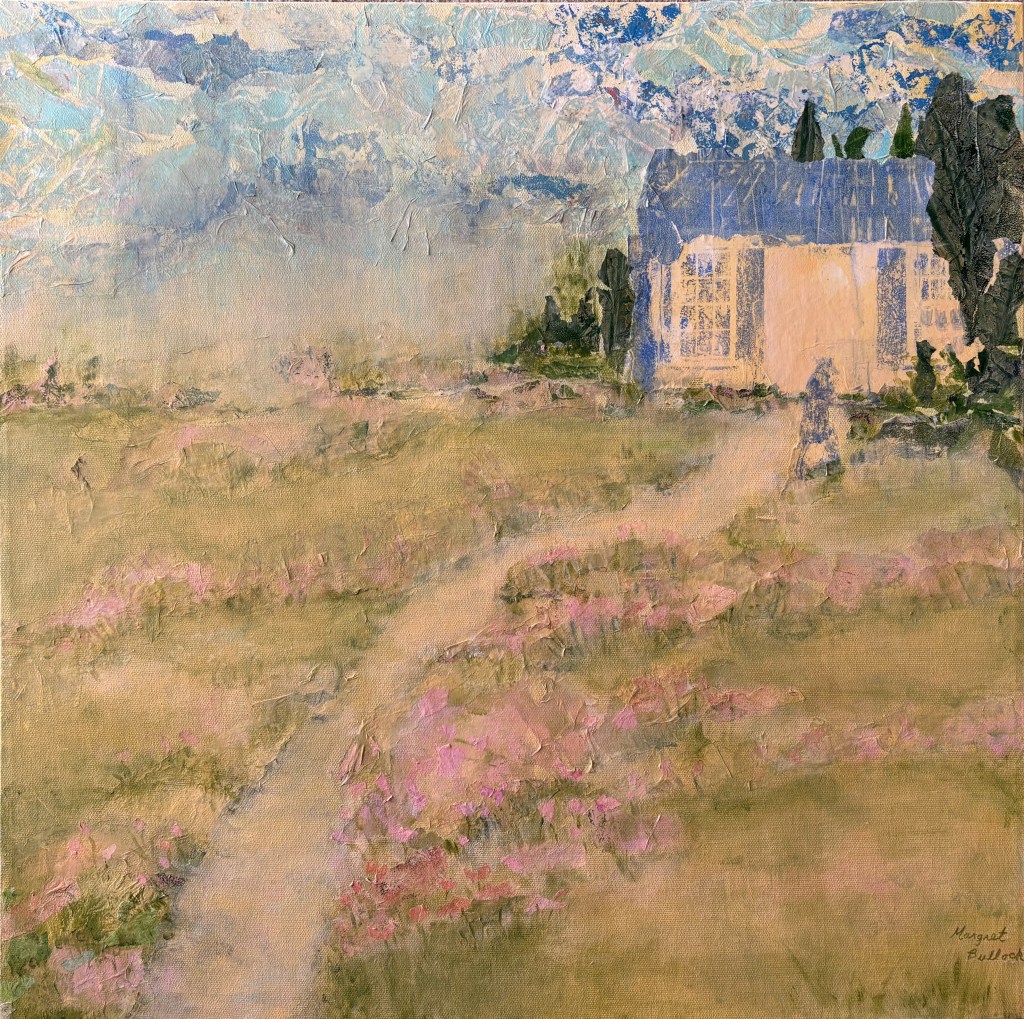
(Pictured: Lambeth Art Association artist Margret Bullock’s “Field of Dreams”, mixed media collage of an imaginary garden scene, 20 by 20 inches.)

Patricia Walker joined the LAA in 2025. She says, “I feel very lucky to be part of the Lambeth group.” When she moved back to southwestern Ontario in 1980, she enquired about joining, but the wait list at that time was years long, so she continued to work in isolation with not a whole lot of excitement about art. This, recalls Walker, resulted in a “period of non-productivity.”
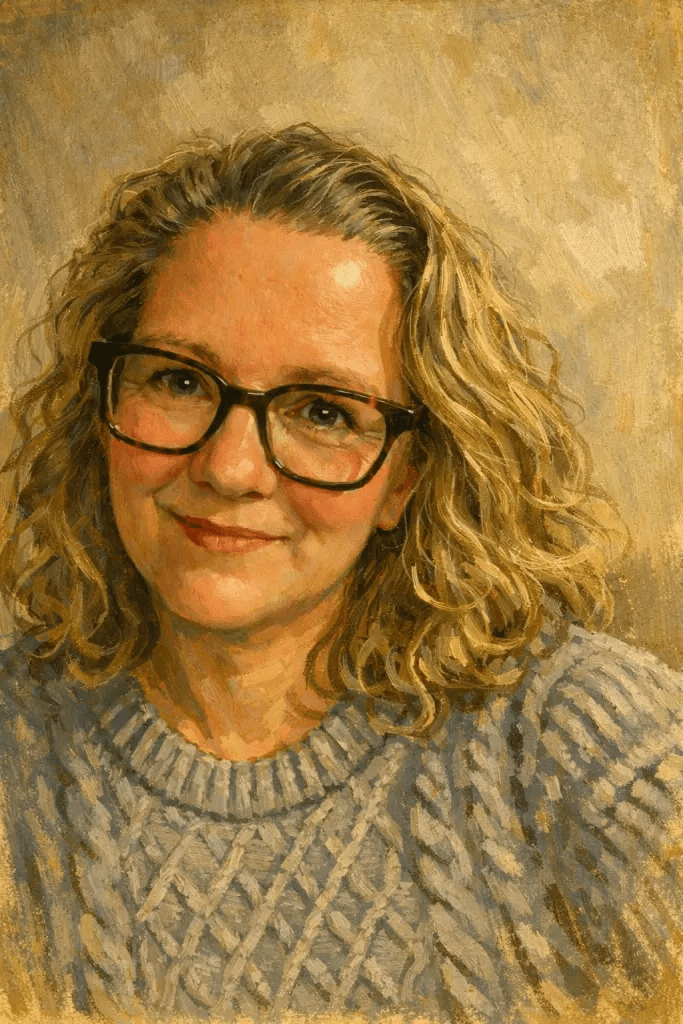
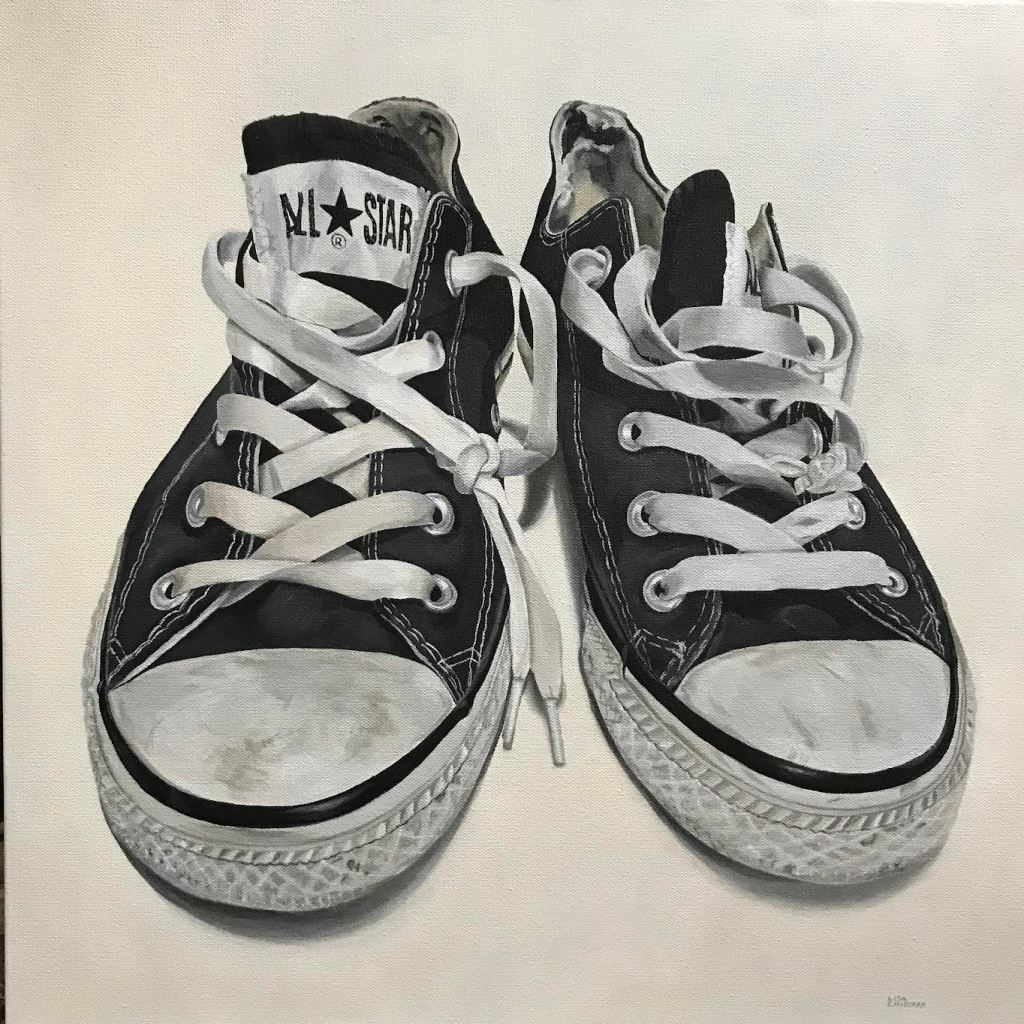
(Pictured: LAA artist Lisa Chiborak’s “Really Big Shoes”, acrylic, 20 by 20 inches.)

Walker says, “The group is friendly and willing to share their techniques, their journey and their frustrations with different mediums. It makes me want to keep creating.” In addition to the LAA, Walker belongs to the London Community Artists, the St. Thomas Art Guild, the Port Stanley Art Guild and the Creative Nomads.

For additional information, visit: https://www.lambethart.com/ or interact with the LAA on Facebook: https://www.facebook.com/lambethartassociation/

The London Community Artists (LCA) is the new kid on the block. It was formed by Wendy Jennings in 2018 in response to the lengthy wait lists to join other clubs.

Membership was initially limited to 50 members, but this was increased to 75 in 2023. Even with the expansion in membership, LCA maintains a wait list of approximately 100 hopefuls. New members are accepted in January to fill any vacancies that have come about throughout the year.

(Pictured: 09 London Community Artists’ Heather Peel, “Autumn Calm”, acrylic (mostly palette knife work), 11 by 14 inches.)

Members’ meetings feature speakers, and there are frequent “Paint Days” at Western Research Park, where members get together to paint and share some special times. The club also offers monthly art challenges in which members submit their best work in response to a specific topic. Entries are reviewed by their peers, and the first and second-place winners receive a gift card for art supplies.

In 2024, they began hosting workshops led by both internal and external experts.

The LCA has established long-term partnerships with Cherryhill Village Mall, Western Research Parks and the Children’s Hospital at London Health Sciences’ Victoria Campus. Members have art on display at each of these locations throughout the year. Their longest-running and most successful display is at the Cherryhill location, where member artists have sold over 140 pieces of art.

(Pictured: “Old Post Office (Cambridge)”, watercolour and ink, 16 by 20 inches, by LCA artist Bill Stephens.)

LCA hosts two major Art Shows each year: one in April and another in November. This year’s Spring Show is scheduled for April 16 to 19, 2026, at The Collider, located in the Western Research Park off Veterans’ Memorial Drive and Bradley Avenue.

Current president Bill Stephens joined in 2019. It is the only club he belongs to, and he has been involved in all the club’s activities.

Membership has served him well in his personal art journey. Stephens says, “I have learned so much from our talented members.”

For additional information, visit: https://londoncommunityartists.ca/

Written by Beth Stewart

Beth Stewart is a writer, educator, and visual artist. She has a B.A. and a B.Ed. from the University of Windsor and a Diploma in Art Therapy from Western University. Beth has worked as an Art Therapist with Canadian war veterans and as a Secondary School Teacher of art and English for the TVDSB. She retired in 2024.

Beth was the arts editor at Scene Magazine from 2004 to 2006. She founded Artscape Magazine in 2006 and served as its editor until 2008. In addition, Beth wrote on the arts for Lifestyle Magazine from 2006 to 2017 and served as the copy editor for The Beat (in print) from 2009 to 2013.

As a visual artist, Beth works mainly in dry media and favours coloured pencil. Over the past decade, Beth’s focus has been on wild and domestic birds. Beth is a member of the Coloured Pencil Society of America, the Gallery Painting Group, the Eclectic Collage Collective, the Lambeth Art Association, and a founding member of the Coloured Pencil Artists of Canada group.

Web: https://bethstewart.ca/

Facebook: https://www.facebook.com/profile.php?id=100009620916363

Q&A With Elizabeth Durand, Artistic Director of Theatre Aezir

by Richard Young

What follows is a Q&A Interview with Elizabeth Durand, Artistic Director of the London professional theatre company, Theatre Aezir. The Beat Magazine spoke with Elizabeth about the company’s production of The Shark Is Broken, playing at First Baptist Church from April 9 to 19.

(Pictured: Elizabeth Durand, Artistic Director of Theatre Aezir.)

Q. What inspired Theatre Aezir to select The Shark Is Broken as its Spring production?

I am constantly on the hunt for fresh, intriguing scripts, and The Shark Is Broken immediately stood out. While everyone knows JAWS as the definitive summer blockbuster that launched Steven Spielberg’s career, this play offers something deeper: a profound, behind-the-scenes look at the volatile personalities and relationships that nearly sank the production. The turning point for me was hearing from a Gen Z colleague who saw the show in New York. Despite having never seen the original film, she was captivated by the storytelling and the caliber of the acting. That confirmed it for me—this isn’t just a play for fans of the movie; it’s a powerful human drama that resonates with everyone.

Q. Could you provide some background information about the play?

It’s a fascinating story: the play was co-written by Ian Shaw, who looks exactly like his father, Robert Shaw (the actor who played Quint in JAWS). Ian actually played his father in the first productions! It started small in Brighton back in 2019 and moved to the Edinburgh Fringe before the pandemic hit. Once theatre returned, it became a massive hit in London’s West End, eventually earning an Olivier nomination. We were lucky to have the North American premiere right here in Ontario at Toronto’s Royal Alexandra Theatre in 2022, followed by a smash-hit run on Broadway in 2023. Everywhere it goes, audiences and critics fall in love with it.

Q. Could you provide a brief plot synopsis of the play? Do any of the famous scenes from the film appear in the play?

So, picture this: it’s 1974, and the three stars of Jaws—Robert Shaw, Richard Dreyfuss, and Roy Scheider—are stuck on a tiny boat called the Orca.

What was supposed to be a quick 55-day shoot has turned into a 159-day nightmare. Why? Because the mechanical sharks keep breaking down the second they hit the salt water. So, while the crew is frantically trying to fix “Bruce” the shark, these three huge personalities are trapped together for days on end with nothing to do but drink, play cards, and drive each other crazy. It’s a hilarious and sometimes heavy look at the egos and the bonding that happened when the cameras weren’t rolling.

(Pictured: Josh Cottrell as Robert Shaw, Andrew Dodd as Roy Scheider, and Jackson Balint as Richard Dreyfuss.)

As for the movie itself, you definitely get some iconic moments! The big one is the “Indianapolis” monologue. Robert Shaw actually wrote a lot of that speech himself in real life, so the play shows the “behind-the-scenes” version of how that legendary scene came together. It’s a really cool “meta” moment for anyone who loves the film.

Q. One of your promo pieces for the play encourages people to rewatch (or watch for the first time) the original 1975 film, Jaws. Could you elaborate on that?

You definitely don’t need to see the movie to enjoy the play, but it certainly helps you appreciate why Robert Shaw is so incredibly grumpy in our version! Rewatching the 1975 classic reminds you of the legendary masterpiece the world eventually saw—while our show reminds you of the chaotic reality behind it. It’s the ultimate “Expectation vs. Reality” comparison: the film is the polished final product, but our play reveals a broken shark, a sinking boat, and three lead actors who were five minutes away from throwing each other overboard. Plus, for the eagle-eyed fans, the play is packed with “Easter Eggs” that make the experience even more rewarding.

(Pictured: Andrew Dodd as Roy Scheider.)

Q. The main characters (actors) depicted in the play are well known to most moviegoers. What challenges have you faced in bringing these folks to the stage?

In theatre, there’s a well-known maxim that casting is 80-85% of the show. I would never have programmed The Shark Is Broken without total confidence that we could find actors to inhabit these legendary roles. We are incredibly fortunate to have Josh Cottrell, one of London’s finest actors, who brings the perfect look and age to the role of Robert Shaw—he is truly magic on stage. For Roy Scheider, Andrew Dodd was the only actor I considered after his stellar performance in Misery. To complete the trio, our search for the high-energy Richard Dreyfuss led us to Jackson Balint from Windsor, who perfectly captures Dreyfuss’s iconic volatility. Under Dylan Trahan’s direction, these three have truly brought these Hollywood giants to life.

(Pictured: Josh Cottrell as Robert Shaw.)

Q. Obviously, the shark plays a major role in the success of Jaws. Does the shark appear in The Shark Is Broken?

The shark doesn’t make a physical appearance, but Bruce—as the mechanical shark was famously nicknamed—is a constant, looming presence! Ironically, Steven Spielberg named the shark after his lawyer, which tells you everything you need to know about his relationship with his lawyer! While you won’t see a fin on stage, you’ll certainly feel the weight of his mechanical failures and the havoc they wreaked on our three protagonists.

(Pictured: Jackson Balint as Richard Dreyfuss.)

Q. How would you describe the sets, props, and costumes of the play?

Our production design is a love letter to the Orca. Designer and builder John Beverley has created a stunning, “sliced-open” version of the famous vessel, allowing the audience to peek directly into the high-tension environment where the actors spent those 159 days. The set features a meticulous recreation of the film’s iconic banquette and table, surrounded by authentic nautical props and décor curated by Doug Cottrell. Framing the entire scene is a breathtaking 12’ x 20’ backdrop of the open ocean and sky. To complete immersion, the costumes are direct recreations of the actors’ film attire. However, getting that 1970s “Dreyfuss” bleach job on the denim jacket was a production in itself!

(Pictured: Scene Painter Adriel Kuepfer.)

Q. Tell me about your venue – First Baptist Church.

We love the versatility of our space at First Baptist! By converting the gym into an intimate black box theatre, we create a unique atmosphere that our audience finds incredibly welcoming. Thanks to a recent grant and our amazing donors, we’ve moved away from borrowed wooden risers and now own our own Staging Canadell risers. This means every seat in the house is a great one! Plus, the space is fully accessible via elevator, with restrooms conveniently located on both floors.

Q. What can audiences expect from The Shark Is Broken?

I think the biggest surprise for our audience is going to be the intimacy of it all. Because we’ve turned the gym into this tight, professional black box space, you aren’t just watching a play from a distance—you’re basically a stowaway on the Orca. You can expect to feel that salt-air tension and the claustrophobia of three massive egos trapped in a tiny cabin. It’s also much funnier than people expect. There’s this constant, witty friction between the three leads that keeps you laughing, but then it’ll suddenly pivot into a really raw, human moment about the price of fame or the fear of failure. Essentially, you can expect a ‘masterclass in character.’ It’s a fast-paced, 90-minute dive into the messy reality behind a masterpiece. You’ll walk out of the theater looking at that movie—and those three actors—in a completely different light. It’s a bit of a ‘behind-the-curtain’ thrill.

Q. Is there anything else you think readers should know about The Shark Is Broken?

If there’s one thing I want people to know, it’s that this show is a massive labor of love from a team that is operating at the top of its game.

We aren’t just ‘putting on a play’ in a gym; we’ve completely reimagined our space at First Baptist. Between the brand-new seating risers, which we just debuted (thanks to our incredible donors!), and the insane level of detail in John Beverley’s set, we are pushing Theatre Aezir to a whole new level.

I really want to highlight the atmosphere, too. Craig is doing some brilliant work with the lighting to capture that ‘stuck at sea’ feeling, and Doug has been a machine sourcing authentic nautical props—you can almost smell the salt air. But the real secret weapon is the soundscape. Avery is a master at building that immersive environment, and our director, Dylan, has had a hand in every single layer of it to make sure the audience feels every wave hitting the hull.

From Mike Semple keeping the technical gears turning to our cast—Josh, Andrew, and Jackson—finding the soul of these three icons, it’s been a total collaboration. At its heart, The Shark Is Broken is about people trying to create a masterpiece while everything around them is falling apart. I think anyone who’s ever tried to build something or lead a team is going to see themselves in this. It’s gritty, it’s hilarious, and it’s a great night of theatre for London. We can’t wait to welcome you aboard!

Q. Tell me about Theatre Aezir, its origins, mandate, and future plans.

Theatre Aezir really started from a simple, stubborn idea: that London deserved a space for professional-grade, provocative theatre that doesn’t just play it safe. We wanted to create ‘Theatre for the 21st Century’—shows that are lean, mean, and intellectually curious. Our artistic aesthetic has always been about the actor and the text. We strip away the fluff to focus on high-stakes stories that stay with you long after you leave your seat. We want to challenge our audience, not just entertain them.

As a registered charity, our mandate includes providing work and educational opportunities for theatre practitioners and actors, and we strive to build community and deepen the city’s cultural life.

As for our origins, we’re a theatre company without a theatre. Although rather nomadic, First Baptist has proved to be a great venue, as this is our third production in this space.  We’ve been proving that you don’t need a massive proscenium arch to create fantastic drama.

Looking at the future? It’s all about transformation. Thanks to some incredible support from our donors and the community, we’ve been able to invest in professional black box equipment—like our brand-new seating risers—that allows us to turn any space into a high-end theatre. We’re progressing toward more immersive, technically ambitious work (like the ‘sliced’ Orca you’ll see in The Shark Is Broken).  In the fall, we’ll move again for Bluebirds, which we will produce in the RCR Museum. Our goal is to keep growing as a hub for local talent and a destination for theatergoers who want something a bit more ‘edge-of-your-seat.’ We’re just getting started.

All Photos by Ryan Memarazdeh.

CAST
Richard DreyfussJackson Balint
Roy ScheiderAndrew Dodd
Robert ShawJosh Cottrell
Stage DirectorDylan Trahan
Stage ManagerAnna Whitehead
Technical Artists
Technical DirectorMike Semple
ProducerElizabeth Durand
Costume designerElizabeth Durand
Sound designerAvery Brown
Set Designer/BuilderJohn Beverley
Lighting DesignerCraig Blackley
Sound OperatorJessica Norrie
ASMJill Canterbury
Props MasterDoug Cottrell
PhotographerRyan Memarzadeh
Volunteer Coordinator/House ManagerCatherine Mazhandu
Marketing/GraphicsKaitlyn Bell
Fight DirectorNick Van Burek
Scene PaintersMiranda Hews, Adriel Kuepfer
ProstheticsAnthony Veilleux

IF YOU GO:

What: Theatre Aezir presents The Shark Is Broken.

When: April 9 to April 19, 2026.

Where: First Baptist Church, 568 Richmond Street, London, ON.

Tickets: For more information and tickets, visit http://www.theatreaezir.com

Follow Theatre Aezir on Facebook and Instagram.

Q&A Interview conducted by Richard Young, The Beat Magazine’s Publisher & Content Manager.

Share this:

The Importance of Being Earnest: A Riot of Colour and Wit – If You Can Keep Up!

by Richard Young

Reviewed by Jo-Anne Bishop

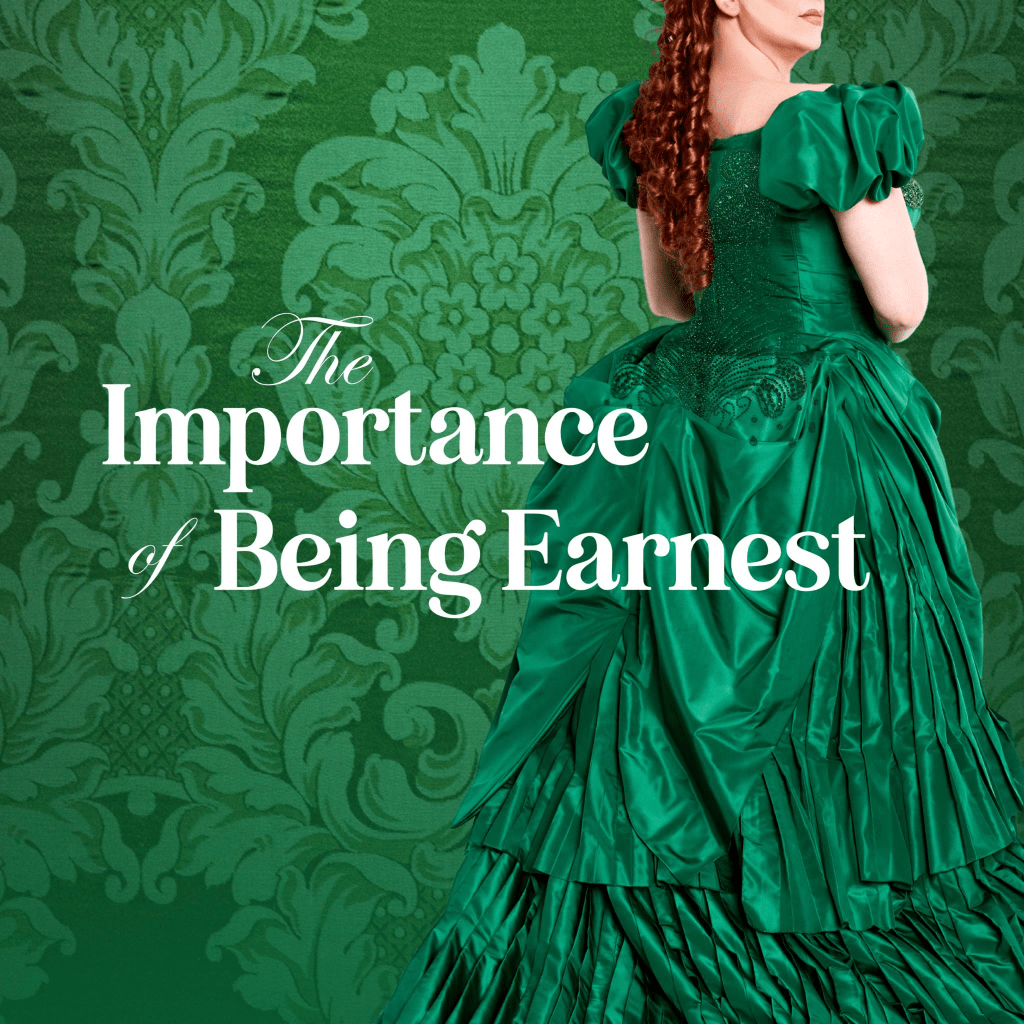
There’s a reason Oscar Wilde’s The Importance of Being Earnest has endured for well over a century. Premiering on Valentine’s Day in 1895 at London’s St. James Theatre, the play is a razor-sharp satire of Victorian society, skewering everything from marriage and class to the absurdity of social expectations. Wilde’s signature style—fast-paced, highly stylized, and dripping with irony—remains both its greatest strength and, at times, its greatest challenge.

As quoted in the director’s note, “rarely has the stiletto of dissident humour been driven so smilingly between the ribs of bourgeois convention.”  This line from Neil Bartlett perfectly captures Wilde’s enduring bite.

Now playing at the Grand Theatre, this production, directed by Alistair Newton, leans boldly into theatricality, delivering a visually striking and energetically performed interpretation that feels surprisingly modern and relevant in 2026. Wilde’s themes of performative identity, social façades, and the tension between authenticity and expectation still resonate today, perhaps even more in an age of social masking, highly curated personas and digital selves.

That said, this is not a production you can passively absorb.

(Photo by Dahlia Katz.)

I found myself needing time to sit with the show afterwards. The rapid-fire dialogue and heightened language, true to Wilde, can be difficult to follow, especially if you’re not already familiar with the story. There were moments where I lost the thread entirely, only to piece things together in retrospect. For audiences new to the play, a bit of homework beforehand will go a long way. If you have a short attention span or struggle with dense, fast-paced English dialogue, this is one where preparation really matters.

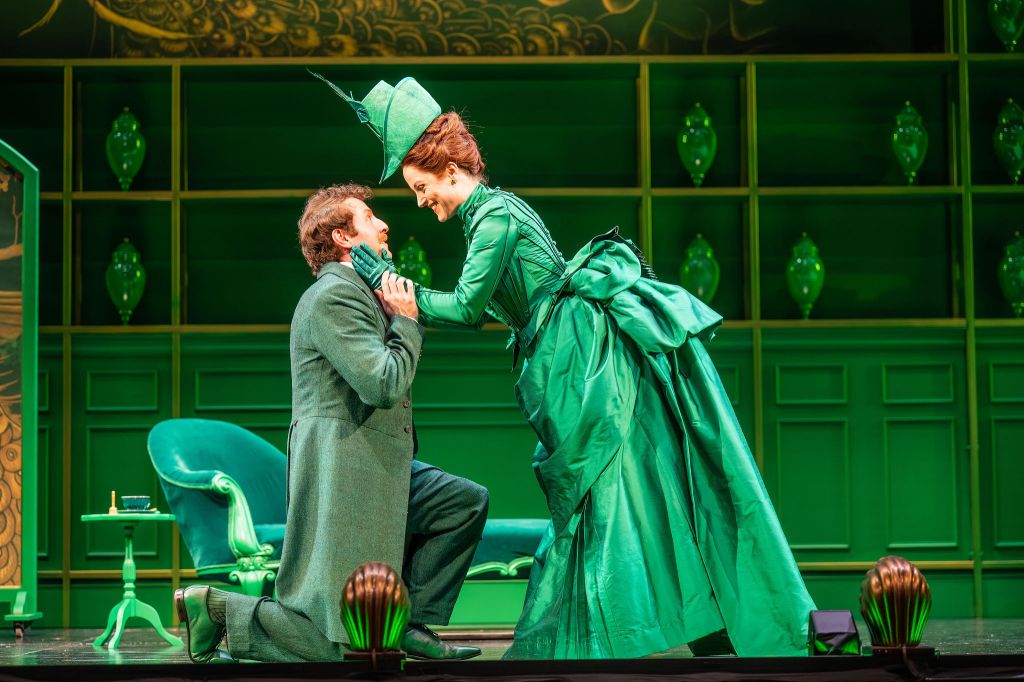
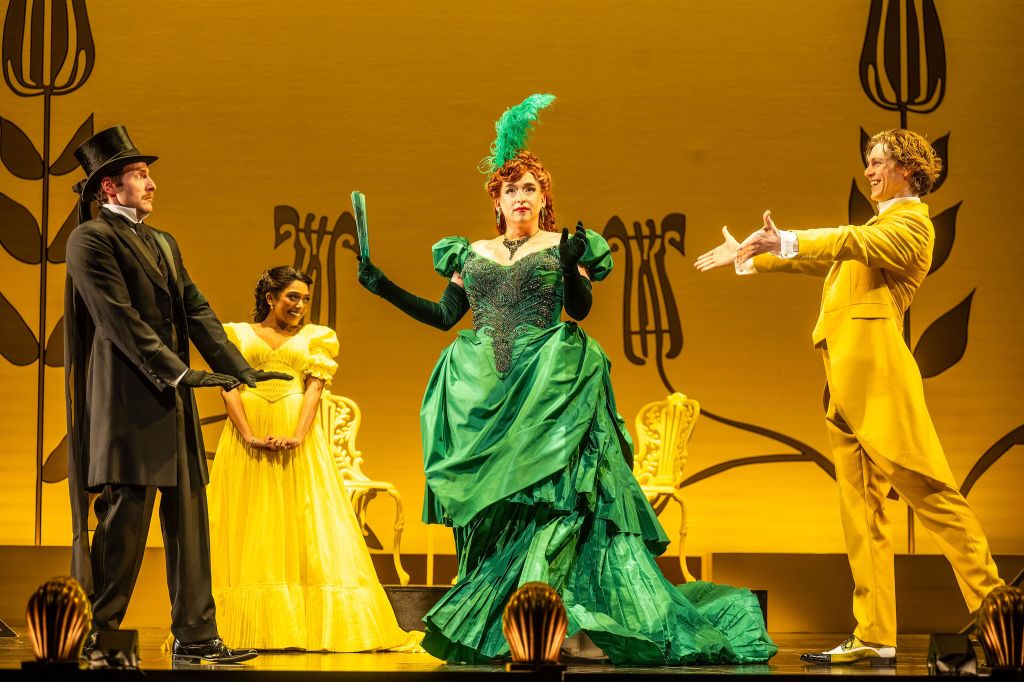
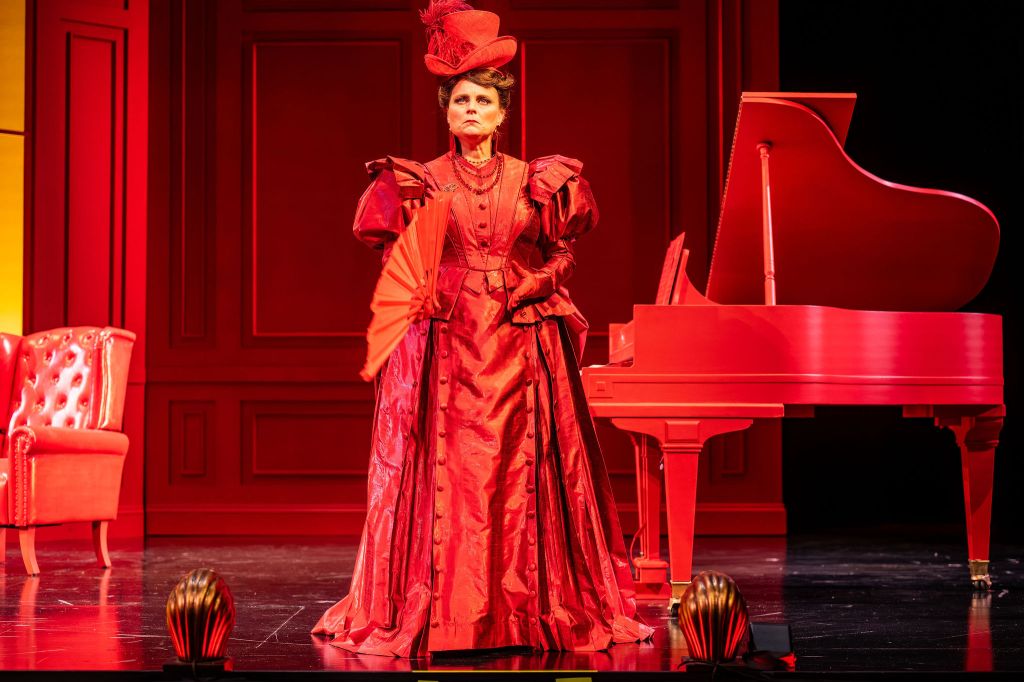
Visually, the production makes a striking and very bold statement. Set designer Michelle Tracey creates three distinct worlds across the acts: a lush, all-green opening (down to the piano and cigarette case), a fully yellow second act, and a vivid red-and-yellow third. The only figure fully in red is the formidable Aunt, commanding attention in a room that mirrors her dominance. It’s an ambitious and cohesive design, though at times, its intensity borders on overwhelming.

(Photo by Dahlia Katz.)

The costumes, designed by Judith Bowden, are pitch-perfect: bright, bold, and beautifully in sync with the set’s colour story. One exception is Cecily, whose costume felt slightly muted by comparison, causing her to fade visually in moments where she might otherwise shine. At the same time, it perfectly separated her character from the others, showing the contrast between the city’s pomp and the country’s quiet reserve.

(Photo by Dahlia Katz.)

The dialect work, coached by Phyllis Cohen, is strong throughout, helping anchor the heightened language in both clarity and rhythm.

Performance-wise, the cast is superb across the board. Deena Aziz brings warmth and precision to Miss Prism, while James Daly’s Algernon Moncrieff is delightfully playful. Julien Galipeau grounds John Worthing with charm, and Kaylee Harwood delivers a sharp, engaging Gwendolen Fairfax. As Lady Bracknell, Claire Jullien commands the stage with authority and wit, while Ben Sanders capably fills multiple roles, including Reverend Canon Chasuble and Lane.

Standout performances for me came from Billy Lake as Lady Stella Clinton and the Merriman—whose drag performance drew some of the biggest laughs of the evening—and Mirabella Sundar Singh as Cecily Cardew, who brought a delightful presence and nuance to the role.

Ultimately, The Importance of Being Earnest isn’t going to be for everyone, and this production doesn’t try to soften its edges. It’s fast, it’s dense, and it demands your attention. But if you’re willing to meet it on its level, it offers a rewarding, visually dazzling, and often very funny experience. And while there may not be a distinct message or lesson to learn, it makes a bold statement.

Overall, this is a vibrant, well-directed production with exceptional performances, inventive design, and a distinctly modern pulse. Just be prepared to keep up.

IF YOU GO:

What: Oscar Wilde’s The Importance of Being Earnest, Directed by Alistair Newton

Where: The Grand Theatre, 471 Richmond St, London, Ontario

When: March 24th to April 12th, 2026.

Tickets: $25-97, available at the Box Office or online at The Importance of Being Earnest | The Grand Theatre

Reviewed by Jo-Anne Bishop

Background and Experience in the Arts

My background in the Arts started with an early love for music and dance. I attended my first concert at 10 years old (Helix at the Sarnia Arena in 1983!) and began tap and modern jazz dance lessons around the same time. My love for live theatre was built through school trips to the Stratford Festival to see plays like Romeo and Juliet, The Merchant of Venice, and Macbeth, and a trip to Toronto for The Phantom of the Opera, which quickly became my all-time favourite.

I dreamed of performing for many years, but being too self-conscious to audition in high school, I sat on the sidelines and instead reviewed music and theatre for our school newspaper. In 2013, I finally pushed my fears aside and was cast in my first play, Laughter on the 23rd Floor, as Carol Wyman, the only female writer on the Max Prince show. I have since performed in productions of Birth (Jillian, 2016), Hamish (Annette, 2023) and The Curious Incident of the Dog in the Nighttime (Mrs. Alexander, 2024).

Previous Reviewing Activities

SCITS, Sarnia, Ontario – High school newspaper reviewer for Music and the Arts

London Fringe Festival, London, Ontario, 2012-2015

Independent Reviewer and Blogger (Theatre in London and The Pollyanna Papers), 2015-2016?

Why am I jumping back into the fray now?

After performing for a few years, I’ve decided to take a break from the grind of auditioning, rehearsing and performing. While I love it immensely, it’s a lot of work. Performing has given me a whole new perspective and appreciation of what goes into a production and the ability to look at reviewing with a fresh set of eyes.

Thoughts about the London arts and culture scene, especially local theatre

Hoo wee! London has such a wealth of talent, from youth to adults. Every time I see a play, I am amazed at how talented our actors, directors, producers, set/prop/costume/light/, and sound designers are. I don’t think causal observers realize just how much goes into making a production from the audition to the curtain call. It is a huge undertaking, and to think our theatres produce such world-class productions on some very tight budgets is astounding, especially at the community theatre level, where volunteers do everything.

Sadly, since COVID, I have witnessed a huge decline in attendance at performances, and it breaks my heart. I have also noticed a sad lack of reviews lately, which I find are necessary to give people an idea of what to expect and a reason to go to the theatre.

So, before I can put my feet on the stage again, I want to help put bodies in the seats. We need to reignite a love for theatre and the arts in this city.

A Killer Performance Anchors a Sharp “Prescription: Murder”

by Richard Young

Reviewed by Jo-Anne Bishop

(Pictured: Cast of Prescription: Murder, Tameka Brown, Eve Cohen, Andre Cormier, David Pasquino, Sam Didi, and Makayla Ashenden. Photo Credit: Ross Davidson.)

Murder is rarely this polished – or this fun to watch.

On the Auburn Stage at the Grand Theatre in London, Ontario, Prescription: Murder wastes no time pulling its audience into a sleek, slow-burning game of cat and mouse. Running March 19–29 and directed by Stephen Mitchell, this black box production leans into intimacy and largely thrives because of it.

Originally written by William Link and Richard Levinson, the play serves as the foundation for the iconic television detective Columbo. The story centres on a brilliant and calculating psychiatrist who believes he has devised the perfect crime, only to find himself gradually entangled in a battle of wits with the seemingly unassuming Lieutenant Columbo. What unfolds is less a traditional whodunit and more a tense psychological chess match, where the outcome feels inevitable, but the journey is where all the intrigue lies.

(Pictured: David Pasquino as Lieutenant Columbo. Photo Credit: Ross Davdson.)

The ensemble is tight and reliable across the board. Makayla Ashenden brings a grounded vulnerability to Susan Hudson, while Tameka Brown and Eve Cohen offer strong, steady support as Miss Petrie and Claire Flemming. Sam Didi moves seamlessly through dual roles, and David Pasquino’s Lieutenant Columbo is understated, patient, and quietly probing—exactly what the role demands.

But let’s be honest: this is André Cormier’s show.

(Pictured: Andre Cormier as Dr. Roy Flemming. Photo Credit: Ross Davidson.)

As Dr. Roy Flemming, Cormier delivers a performance that is sharp, controlled, and magnetic. He walks a perfect line between charm and menace, with only the slightest of line slips in an otherwise near-flawless turn. What stands out most is his precision. Every look and every pause feels intentional. His seething, barely contained irritation with Columbo simmers just beneath the surface, and it’s riveting to watch. You don’t just see the character unravel; you feel it.

The staging makes smart use of the black box space, carving out distinct environments—the doctor’s office, reception area, apartment, and Columbo’s workspace—without overcomplicating things. A few of the scene changes occasionally drag a beat too long, but they’re supported by effective lighting and sound that keep the tension alive.

(Pictured: Tameka Brown as Miss Petrie, Andre Cormier as Dr. Roy Flemming, and Eve Cohen as Claire Flemming. Photo Credit: Ross Davdson.)

Costuming and attention to detail further ground the production in authenticity. Each character is clearly defined through wardrobe, but it’s Lieutenant Columbo who benefits most from these thoughtful choices. David Pasquino appears perfectly dishevelled with mussed hair, a slightly rumpled coat, and even an untied shoe that subtly reinforces the character’s offbeat, absent-minded persona. It’s a small but effective touch, and one that adds texture and believability without feeling trite or overstated.

(Pictured: Andre Cormier as Dr. Roy Flemming and David Pasquino as Lt. Columbo. Photo Credit: Ross Davdson.)

There are a few minor cracks in the illusion. Some set pieces wobble when doors are slammed, which briefly pulls focus. But these moments are small and quickly forgotten. Overall, this Prescription: Murder is lean, engaging, and anchored by a standout central performance. It’s a confident piece of theatre that knows exactly what it’s doing—and for fans of classic detective drama, it absolutely delivers.

IF YOU GO:

What: DJP Productions presents Prescription: Murder by William Link and Richard Levinson

When: March 19-29, 2026

Where: Auburn Stage, Grand Theatre, 471 Richmond St, London Ontario.

Tickets: $31.70-$36.70  Prescription: Murder | The Grand Theatre

Reviewed by Jo-Anne Bishop.

Background and Experience in the Arts

My background in the Arts started with an early love for music and dance. I attended my first concert at 10 years old (Helix at the Sarnia Arena in 1983!) and began tap and modern jazz dance lessons around the same time. My love for live theatre was built through school trips to the Stratford Festival to see plays like Romeo and Juliet, The Merchant of Venice, and Macbeth, and a trip to Toronto for The Phantom of the Opera, which quickly became my all-time favourite.

I dreamed of performing for many years, but being too self-conscious to audition in high school, I sat on the sidelines and instead reviewed music and theatre for our school newspaper. In 2013, I finally pushed my fears aside and was cast in my first play, Laughter on the 23rd Floor, as Carol Wyman, the only female writer on the Max Prince show. I have since performed in productions of Birth (Jillian, 2016), Hamish (Annette, 2023) and The Curious Incident of the Dog in the Nighttime (Mrs. Alexander, 2024).

Previous Reviewing Activities

SCITS, Sarnia, Ontario – High school newspaper reviewer for Music and the Arts

London Fringe Festival, London, Ontario, 2012-2015

Independent Reviewer and Blogger (Theatre in London and The Pollyanna Papers), 2015-2016?

Why am I jumping back into the fray now?

After performing for a few years, I’ve decided to take a break from the grind of auditioning, rehearsing and performing. While I love it immensely, it’s a lot of work. Performing has given me a whole new perspective and appreciation of what goes into a production and the ability to look at reviewing with a fresh set of eyes.

Thoughts about the London arts and culture scene, especially local theatre

Hoo wee! London has such a wealth of talent, from youth to adults. Every time I see a play, I am amazed at how talented our actors, directors, producers, set/prop/costume/light/sound designers are. I don’t think causal observers realize just how much goes into making a production from the audition to the curtain call. It is a huge undertaking, and to think our theatres produce such world-class productions on some very tight budgets is astounding, especially at the community theatre level, where volunteers do everything.

Sadly, since COVID, I have witnessed a huge decline in attendance at performances, and it breaks my heart. I have also noticed a sad lack of reviews lately, which I find are necessary to give people an idea of what to expect and a reason to go to the theatre.

So, before I can put my feet on the stage again, I want to help put bodies in the seats. We need to reignite a love for theatre and the arts in this city.

Q&A Interview with David Pasquino, Founder of DJP Productions

by Richard Young

What follows is a Q&A Interview with David Pasquino, founder of DJP Productions, who also plays Lieutenant Columbo in the company’s inaugural production, Prescription: Murder, which plays on the Auburn Stage at the Grand Theatre from March 19 to 29.

(Pictured: DJP Productions founder David Pasquino in character as Lt. Columbo. Photo by Ross Davidson.)

Q. How did Prescription: Murder come about? Is it my understanding that its origins are to be found in an episode of the beloved TV series Columbo? Which came first – the play or the TV show?

It’s a great question, and the answer is a bit of a twist worthy of Columbo himself.

Most people assume Prescription: Murder came after the TV series, but in fact, it’s where Columbo began. The story first appeared in March 1960 as a short piece by William Link and Richard Levinson in Alfred Hitchcock’s Mystery Magazine, featuring a detective named Lt. Fisher.

The next version of the story was called Enough Rope and was featured in alive television drama on The Chevy Mystery Show. That’s where we first encounter Lt. Columbo. In the show, Dr. Flemming and his wife plan a weekend trip to Toronto (as opposed to upstate New York, as we see in the play)!

That version evolved into the stage play Prescription: Murder in 1962, which toured successfully and was headed for Broadway before the untimely death of its lead actor, Thomas Mitchell. It wasn’t until 1968 that the story was adapted into the now-iconic TV special starring Peter Falk, launching the beloved Columbo series as we know it.

So, the origin story actually runs in reverse of what most people think:
short story → live TV → stage play → TV special.

Q. What motivated you to select this particular play for DJP Productions’ first production?

Honestly? It’s Pat Sajak’s fault!

A couple of years ago, I came across an article about what Pat planned to do after Wheel of Fortune. Surprisingly, it wasn’t retirement, it was community theatre! Even more surprising? He was stepping into the role of Dr. Flemming in Prescription: Murder at the Hawaii Theatre for a fundraiser. I had no idea that Columbo had started as a play!

That stopped me in my tracks. I had grown up watching Columbo with my family, but I had no idea the character originated on stage. Curious, I ordered the script, and the moment I read it, I was hooked. The tension, the structure, the cat-and-mouse dynamic, it all felt tailor-made for live theatre. And somewhere along the way, I had a realization: I need to see this on stage… and I want to play Columbo.

I brought the idea to my talented wife, Diana Tamblyn, and instead of talking me out of it, she leaned in. She offered to take on the marketing and promotion, and together we saw the opportunity: a smart, suspenseful story with a built-in nostalgia factor that we felt would really resonate with London audiences.

So, what started as a late-night click on an article quickly turned into something much bigger: the launch of DJP Productions and our first production.


Q. Could you provide a brief plot synopsis of the play?

Without giving too much away? Okay: a murder has taken place. A certain unkempt, fumbling, cigar-smoking detective appears on the scene and must unravel the mystery while matching wits with a brilliant killer.

Q. Why did you choose to stage the play at the Auburn Theatre?

I’ve performed there before, so I already knew how special the space is, it has this intimate energy where the audience feels close enough to be part of the story, but still large enough to create real theatrical impact. For a show like Prescription: Murder, where tension and subtlety matter, that balance is everything.

As a first-time producer, that “middle ground” was important. I didn’t want something too small or something overwhelming. The Auburn sits perfectly in that sweet spot: ambitious, but manageable.

There’s also a practical side. It’s a great central location, and having the support of The Grand Theatre behind the scenes, especially for ticketing, adds a level of professionalism and confidence that’s invaluable for a first production.

To top it off, our Director, Stephen Mitchell, worked as a technician in the space for many years, so he is intimately familiar with it. In a lot of ways, the Auburn wasn’t just a venue choice; it became part of the foundation that made launching DJP Productions feel possible.

Q. The Lt. Columbo character, played so marvellously by the late Peter Falk, with all his quirks and mannerisms, must be a hoot to play. Tell me about how you prepared to play the character.

You’d think the first thing I’d do is binge-watch Columbo—but I actually did the opposite.

Peter Falk’s performance is so iconic, so deeply ingrained in all of us, that I knew if I immersed myself in it again, I’d end up doing an imitation of him, and that’s not what this play calls for. Since this version of Columbo actually predates the TV series, so my goal was to go back to the source.

Instead, I lived in the script. I read it over and over, really digging into the stage directions, the rhythm of the dialogue, the subtle cues the writers embedded. I wanted to understand who Columbo was before he became the trench coat, the cigar, the cultural icon.

That said, you can’t completely escape Peter Falk, and I wouldn’t want to. There are a few small, intentional nods in my performance, and I’m sure some of those familiar quirks will surface naturally. But the aim isn’t to replicate—it’s to rediscover.

It will be interesting to hear from people what they think. Regardless, trying to step into the shoes that Peter Falk wore so well for so long is a daunting task, and I hope that people will find my Columbo both fresh and… comfortably familiar.

(Pictured: Tameka Brown as Miss Petrie, André Cormier as Dr. Roy Flemming, and David Pasquino as Lt. Columbo. Photo by Ross Davidson.)

Q. What have been your major challenges getting into the character? Any fear that audiences will spend too much time comparing your portrayal to that of Falk?

I have woken up early many mornings worrying about exactly that! Of course, I want to pay homage to Peter Falk’s Columbo, but I don’t want to be David Pasquino playing Peter Falk playing Columbo.

Again, that’s where the script comes in because it was written before Peter Falk ever took on the role, so my responsibility was to stay true to that original interpretation. I even considered dyeing my hair to resemble him more closely—but my wife made a great point: not looking like Falk might actually help the audience separate my Columbo from his.

Q. What can audiences expect from Prescription: Murder?
For those audience members who are fans of Columbo, hopefully a pleasant visit with a familiar friend. For those who are new to Columbo, an introduction to a cast of interesting, fun characters and a visit to a time before cell phones!

And for both, an enjoyable evening experiencing the twists and turns in a smart, fun story, watching a game of cat and mouse between two brilliant but unconventional people, where the outcome may be known, but how they get there is all the fun!

Q. Tell me about DJP Productions, its origins, mandate and future plans.
I set up DJP Productions for the sole purpose of putting on this show. “DJP” may be my initials, but it could also stand for “Discover Joy and Passion,” which is what I hope that everyone involved in this show, cast, crew and audience, will experience.

As for the future… let’s see how this one goes, and then I’ll see what I’m up for. Although I have had a few people approach me with ideas!

Q. Is there anything else you think our readers should know about DJP’s production of Prescription: Murder?

Let’s all have some fun and enjoy the show!

(Pictured: Cast & Crew of Prescription: Murder. Photo by Ross Davidson.)

Cast:

Tameka Brown – Miss Petrie
Andre Cormier – Dr. Roy Flemming
Eve Cohen – Claire Flemming
Makayla Ashenden – Susan Hudson
David Pasquino – Lieutenant Columbo
Sam Didi – Dave Gordon/Delivery Person

Crew:

Stephen Mitchell – Director/ Sound & Set Design
Mariann Sawyer – Stage Manager
Jessica Norrie – Assistant Stage Manager
Barbara Rand – Props Lead
Nancy Daoust – Props Assistant
Tannis Daoust – Costumes
Diana Tamblyn – Marketing & Promotion
Rob Coles – Lighting Design
David Pasquino – Producer

IF YOU GO:

What: DJP Productions presents Prescription: Murder.

When: March 19 to March 29, 2026.

Where: Auburn Stage at the Grand Theatre, 471 Richmond Street, London, ON.

Tickets: Available in-person at the Box Office, by phone at 519.672.8800, and online at Prescription: Murder | The Grand Theatre

6 Bits Of Writing Advice From Isaac Asimov

About Isaac Asimov 

Isaac Asimov was born 2 January 1920 and died 6 April 1992. The American writer was born in Petrovichi, Russia. During his lifetime, Asimov, along with Robert A. Heinlein and Arthur C. Clarke, was considered one of the ‘Big Three’ science fiction writers.

His work often explored themes like the future with robotics, and the possible moral implications that face artificial intelligence. I, Robot is one of his most widely known written works.

He is one of the most prominent science fiction writers of our era. Asimov is to the genre what Tolkien is to fantasy: an influence that touches almost all subsequent work by other writers.

Asimov had a lifetime as a writer of books and short stories, but also essays and a vast letter collection. In total, Asimov has more than 500 books in his bibliography – and eventually, released special catalogues of his work to keep track.

His work, including the Three Laws Of Robotics and tales like I, Robot, have even inspired real-life research into robotics, morality, and user-safety.

How should a self-driving car react to a potential accident, for example? Asimov raised important questions like these through his work.

6 Bits Of Writing Advice From Isaac Asimov

1. Learn The Rules 

‘Unfortunately, in many cases, people who write science fiction violate the laws of nature, not because they want to make a point, but because they don’t know what they are.’ – Conversations with Isaac Asimov

Fiction needs rules.

Science fiction relies on a mixture of what’s real, and what could be. Asimov points out that a writer must understand basic rules (like physics or gravity) before they are bent for a story.

A writer can’t just say an object defies gravity. The writer has to know something about gravity first.

Rules exist, especially in science fiction, such as what happens when a time traveller meets their past self.

2. Writers Influence

‘It is the writer who might catch the imagination of young people, and plant a seed that will flower and come to fruition.’ – Past, Present and Future

All writers can influence the reader’s mind.

It’s a responsibility that every writer should remember. Words can enthral, inspire, enrage, or unhinge.

Markets ban overly violent fiction, for one example, because of the potential negative impact on readership. Books like Stephen King‘s Rage have been removed from circulation, by the author’s request, after it was found in the locker of an attacker.

Remember: words have impact, and use them with responsibility.

3. Writing Is Solitary

‘Writing is a lonely job. Even if a writer socializes regularly, when he gets down to the real business of his life, it is he and his typewriter or word processor. No one else is or can be involved in the matter.’ – I, Asimov: A Memoir

Being a writer seems social, but isn’t.

Book releases make up less than 1% of what a writer does: elaborate dinner parties account for even less of the writer’s professional time.

A writer writes, and does so alone. A writer doesn’t call their publisher to watch them write.

When you write, it’s just you and the keys.

4. Writing Is Prediction

‘Science fiction writers foresee the inevitable, and although problems and catastrophes may be inevitable, solutions are not.’ – How Easy To See The Future, Natural History Magazine

Science fiction is often predictive. 

Smartphones appeared in Star Trek decades before the popularity of modern devices. Asimov would write about the Laws Of Robotics long before artificial intelligence could hold a full conversation. 

Asimov also speaks of human nature. Entire civilisations have come to an end due to lack of foresight, or eventual lack of resources. 

Science fiction writers can benefit, greatly, from the study of anthropology and human nature. To know what we might do in future, it matters how humans have acted in the past.

5. Write To Be Clear
‘I made up my mind long ago to follow one cardinal rule in all my writing: to be clear. I have given up all thought of writing poetically or experimentally, or in any of the other modes that (if I were good enough) get me a Pulitzer prize.’ – Introduction To Nemesis
Plain language is what makes a best-seller that can be enjoyed by anyone who reads it.

One can’t expect to sell a million copies of a book that only 10% of that million would fully understand. That’s the essence of what Asimov meant with the above quote.

https://1fbcc7dcd84afb5bed3a336b991754e6.safeframe.googlesyndication.com/safeframe/1-0-45/html/container.html

Always write to be clear.

The rule applies for anything, from an email to a short story.

6. Type, Don’t Brood

‘If my doctor told me I had only six minutes to live, I wouldn’t brood. I’d type a little faster.’ – Life Magazine, January 1984

Type, don’t brood.

Writers can do an awful amount of things that aren’t writing. Resist the compulsion to check social media, play games, or boil an egg when you should be writing. 

Procrastination does not lead to great stories, or productive emails. 

Asimov said it straight. 

If you type, you’ll have something you can edit. But if you do everything else, you’ll look back on an empty few hours with no work done.

The Last Word

We hope these bits of writing advice from Isaac Asimov help you with your writing.

By Alex J. Coyne. Alex is a writer, proofreader, and regular card player. His features about cards, bridge, and card playing have appeared in Great Bridge Links, Gifts for Card Players, Bridge Canada Magazine, and Caribbean Compass. Get in touch at alexcoyneofficial.com.

If you enjoyed this, you will love:

  1. Chris d’Lacey’s Top 10 Writing Tips
  2. 7 Bits Of Writing Advice From Mark Twain
  3. Lisa Genova’s 10 Rules Of Writing
  4. 7 Bits Of Writing Advice From Chinua Achebe
  5. Isaac Bashevis Singer’s 3 Characteristics A Work Of Fiction Must Possess
  6. 7 Bits Of Writing Advice From Kazuo Ishiguro
  7. Trudi Canavan’s 3 Tips To Improve Your Writing
  8. Nora Roberts On How She Writes
  9. 7 Bits Of Writing Advice From H. G. Wells
  10. Writing Advice From The World’s Most Famous Authors

Top Tip: Find out more about our workbooks and online courses in our shop.

10 QUOTABLE TIPS FROM OSCAR WILDE ON WRITING

In this post, we share 10 quotable tips from Oscar Wilde on writing.

Oscar Wilde was born 16 October 1854, and died 30 November 1900. Wilde was an ‘Irish wit, poet, and dramatist whose reputation rests on his only novel, The Picture of Dorian Gray (1891), and on his comic masterpieces Lady Windermere’s Fan (1892) and The Importance of Being Earnest (1895).’

And his writing is delightful. Every sentence in The Picture of Dorian Gray is quotable for better or worse.

His plays capture your attention with wonderful wordplay. And, his writing will leave you in despair, because you will never be as good a wordsmith as Oscar Wilde was on his worst day.

So, let us lament at this fact and learn what we can from the world’s wittiest writer.

10 Quotable Tips From Oscar Wilde On Writing

1. ‘I am so clever that sometimes I don’t understand a single word of what I am saying.’

The Happy Prince and Other Tales

If you don’t understand what you are saying, why should I? Don’t be so clever you become unreadable.

Edit your work until even the densest reader will think it is witty.

2. ‘The good ended happily, and the bad unhappily. That is what fiction means.’

The Importance of Being Earnest

This is a good thing to remember for anyone who wants to subvert the expectations of readers.

That is to say, don’t do it. People read fiction to get away from reality, not to be told about it. They like (mostly) happy endings.

3. ‘An idea that is not dangerous is unworthy of being called an idea at all.’

The Epigrams of Oscar Wilde

Much of what Wilde wrote about was controversial and it got him in trouble. At the same time it got him noticed and, well, we are still talking about him.

4. ‘It is what you read when you don’t have to that determines what you will be when you can’t help it.’

The Decay of Lying

A writer’s style is not going to be determined by set-works from English class, but by the thousands of books you read just because you want to.

Particularly, the one’s you read over and over again.

Keep that in mind when you cultivate a writing style.

5. ‘A man who does not think for himself does not think at all.’

The Soul of Man under Socialism

If you have a boring mind, it will have boring thoughts, and for the love of God please don’t make me read the books it writes!

6. ‘Books are never finished. They are merely abandoned.’

The Picture of Dorian Gray

Authors always write more than they share with their audience. Even bestseller authors have abandoned manuscripts.

Sometimes, they will never be finished but, you will learn to live with it.

7. ‘There are no more than two rules for writing: having something to say, and saying it.’

The Picture of Dorian Gray

There are, however, a number of best practices which we cover in several good courses.

8. ‘Words! Mere words! How terrible they were! How clear, and vivid, and cruel! One could not escape from them. And yet what a subtle magic there was in them! They seemed to be able to give a plastic form to formless things, and to have a music of their own as sweet as that of viol or of lute. Mere words! Was there anything so real as words?’

The Picture of Dorian Gray

Words tend to stick in the mind even late at night when one wants to sleep.

Sometimes, writing them down allows a writer to get on with their life.

9. ‘There is no such thing as a moral or an immoral book. Books are either well written or badly written.’

The Picture of Dorian Gray

If you have a good idea and know you can write it well, don’t let a sense of morality stop you.

Goodness knows it hasn’t stopped some really awful and awfully good things from being published.

10. ‘If one cannot enjoy reading a book over and over again, there is no use in reading it at all.’

Writer’s Digest

A good writer should aim for this. You should write a book that will captivate a reader on their first reading just as much as their tenth.

I have a few books that are held together with goodwill and Sellotape that attest to this statement.

Bonus Tip: ‘Be yourself; everyone else is already taken.’

I particularly like this last quote because it is one of the most famous Wilde quotes and there is no evidence he ever wrote it.

I think this would please him.

TIP: If you want help writing a book, buy The Novel Writing Exercises Workbook.